

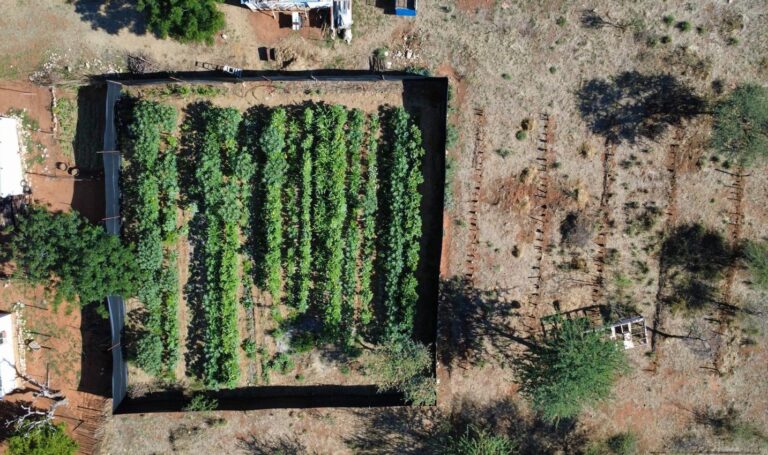
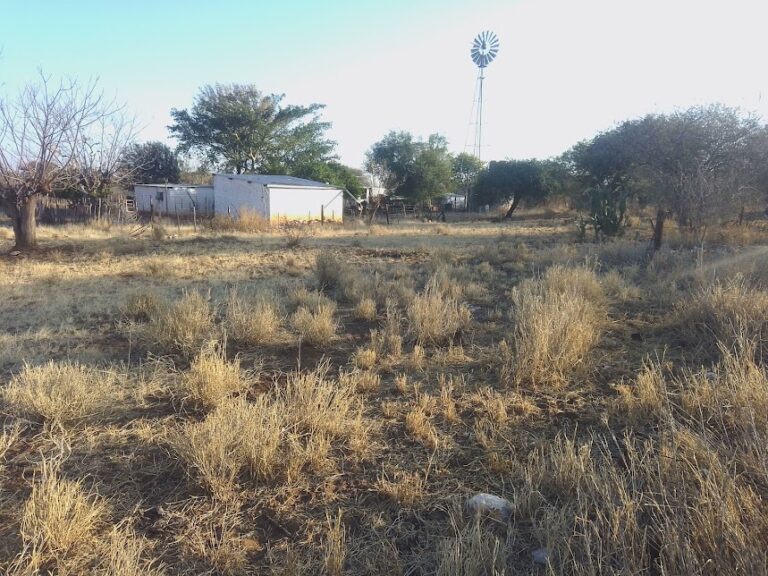
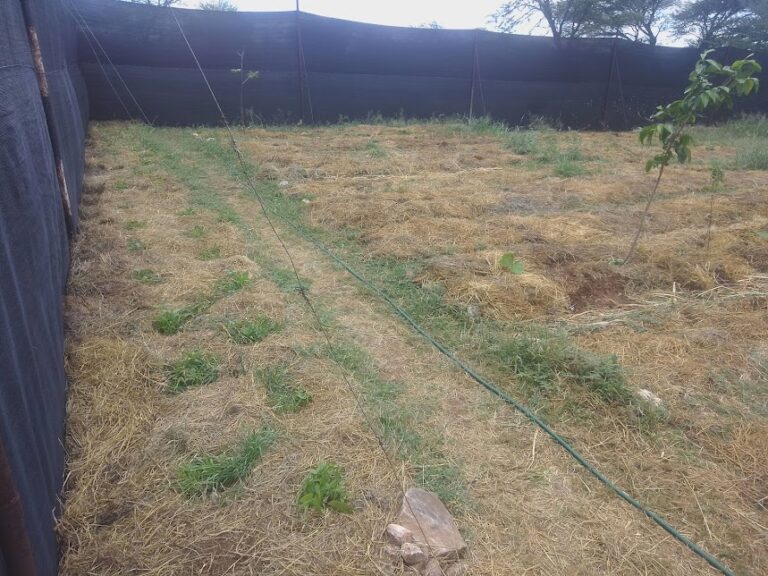
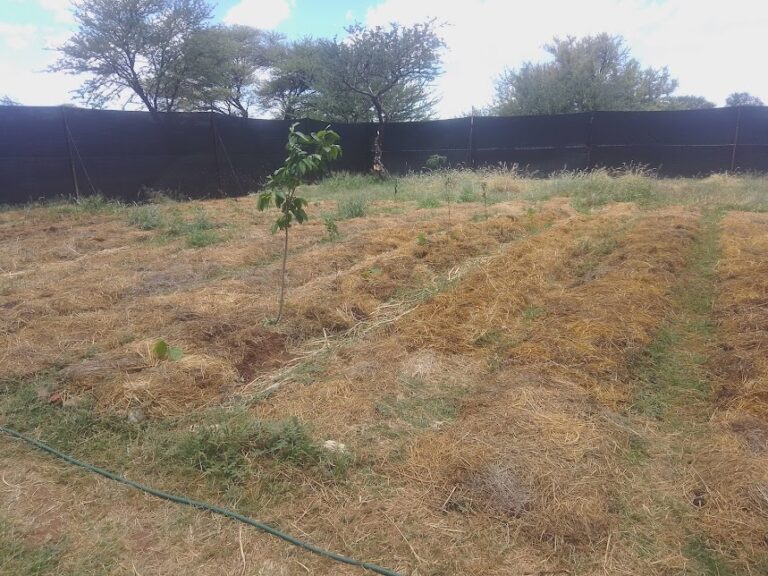

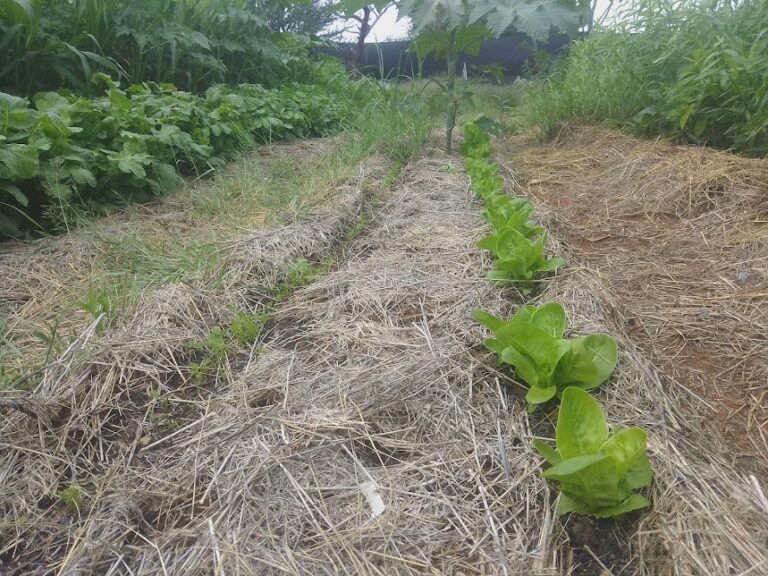
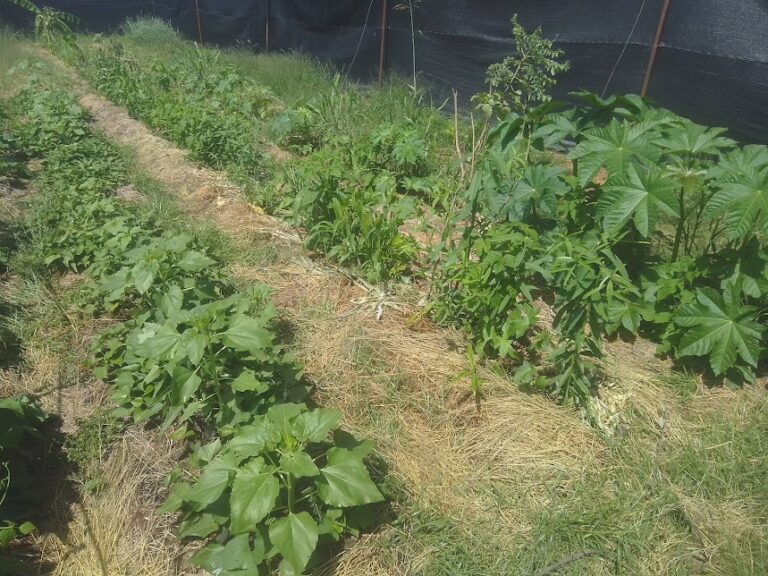
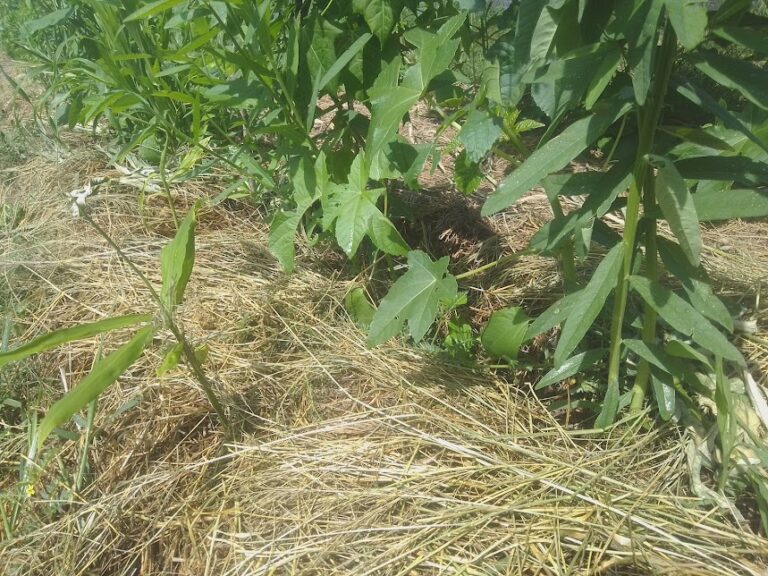
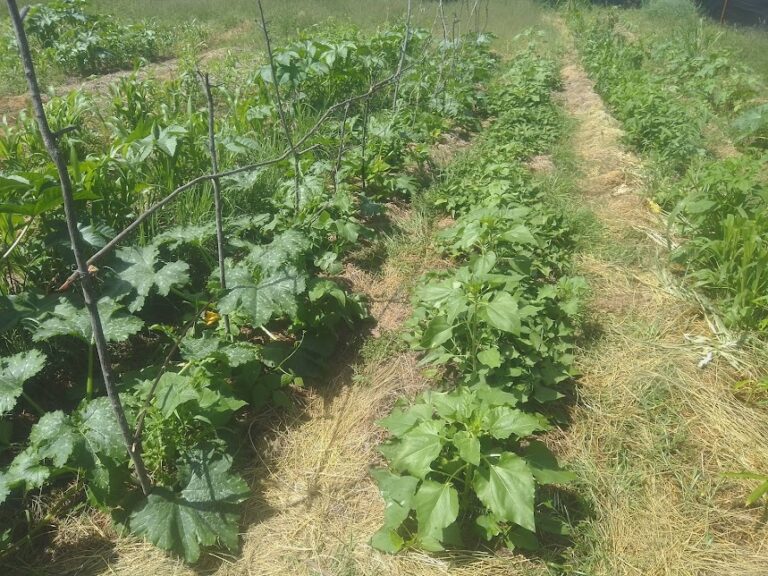
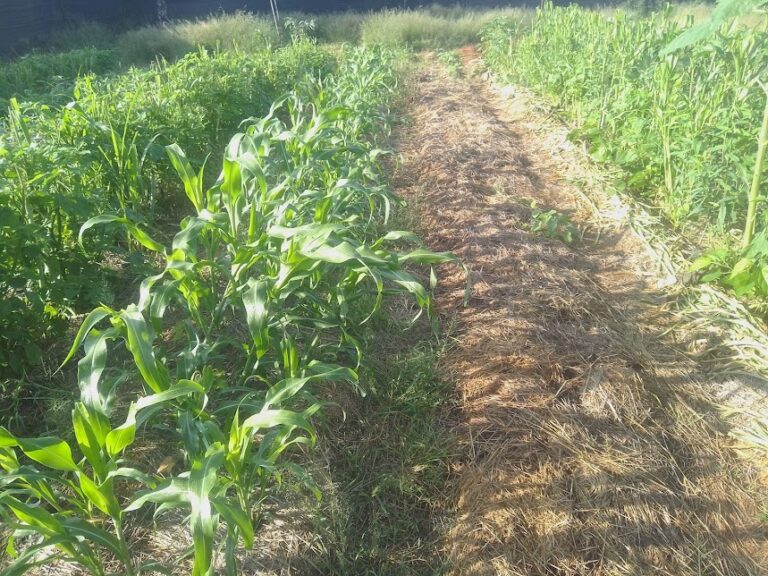
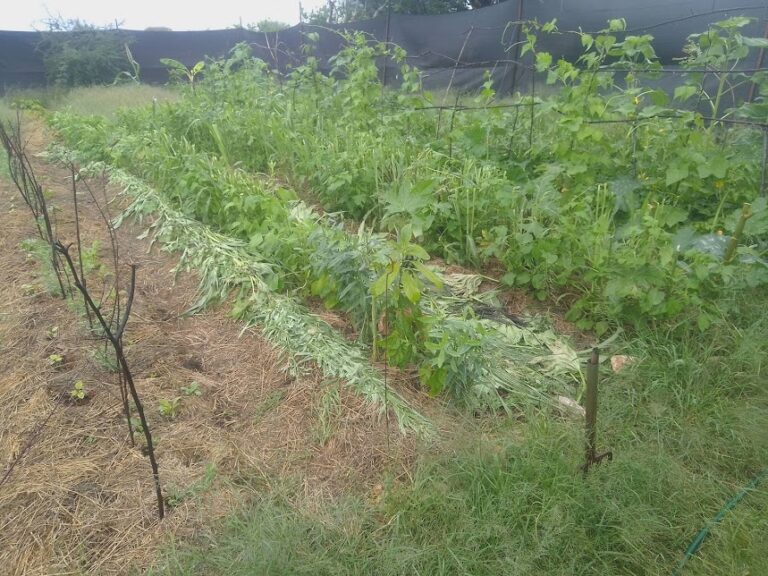
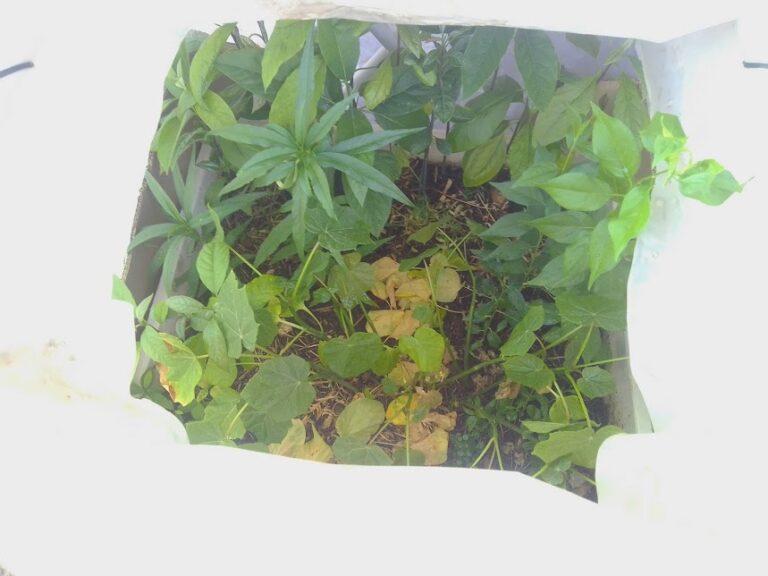
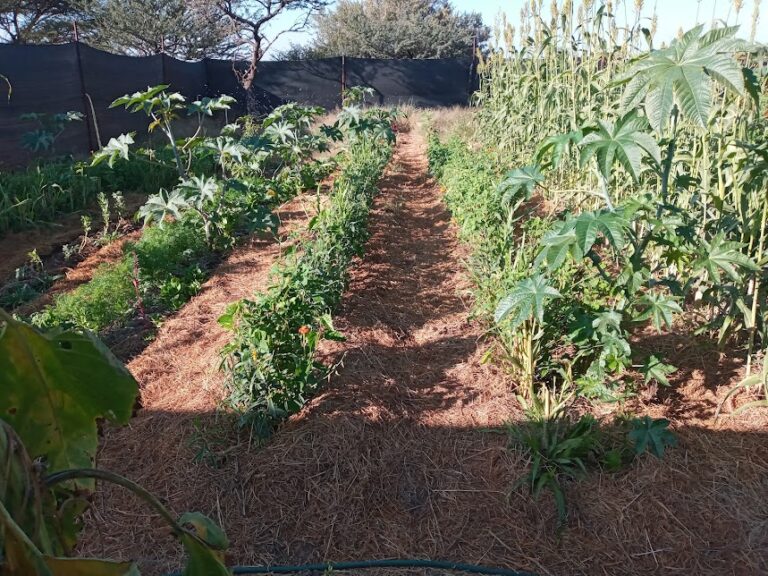
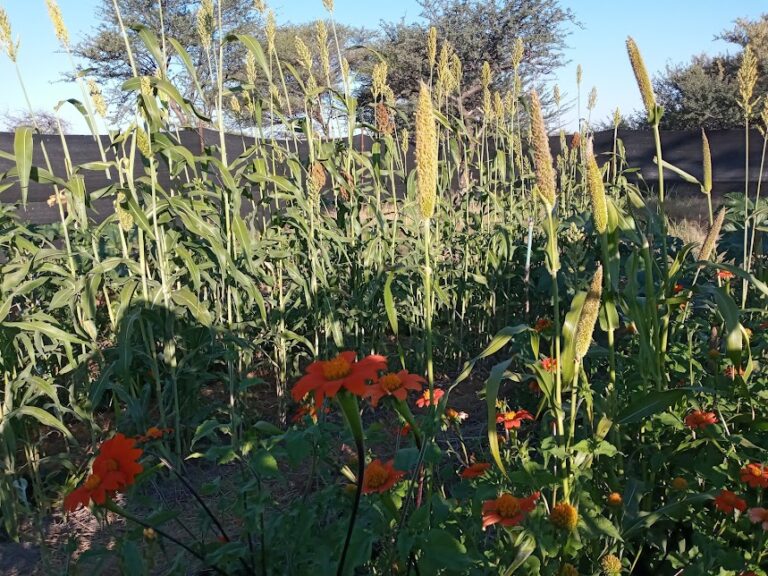
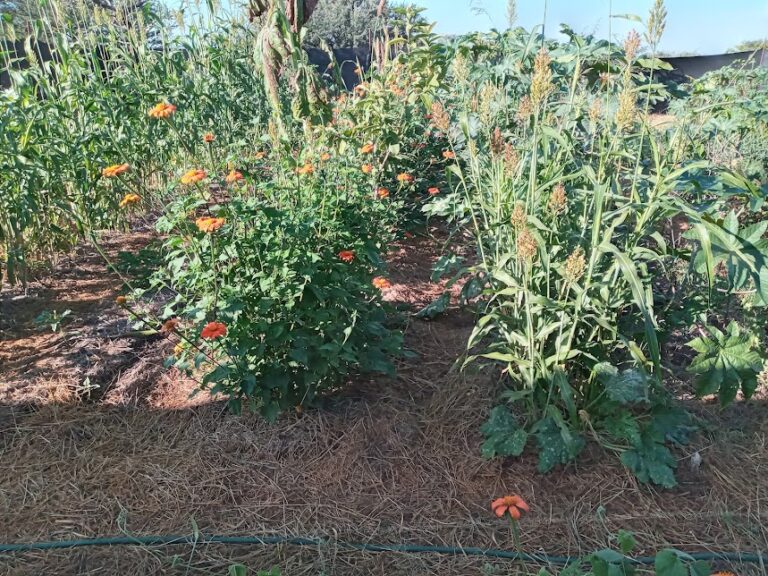
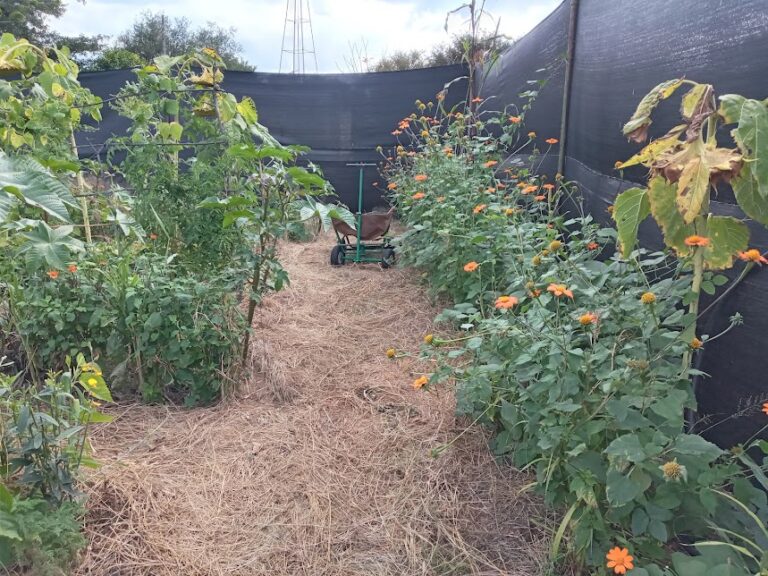

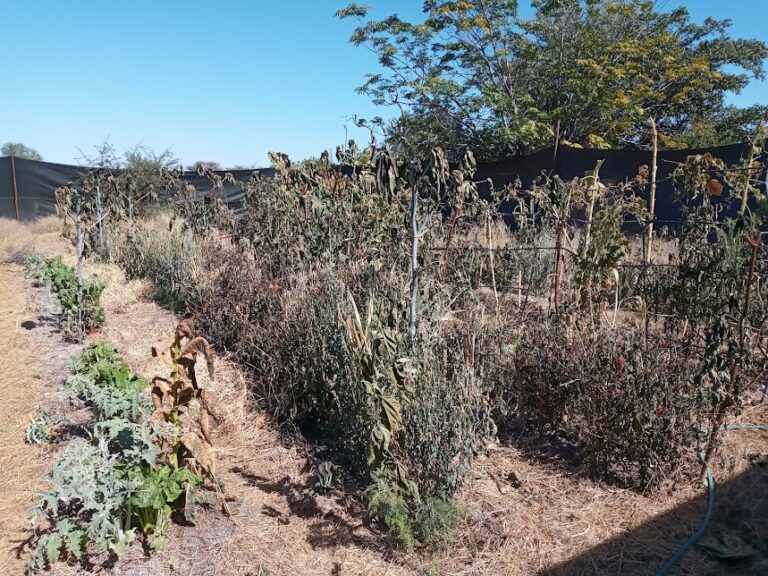
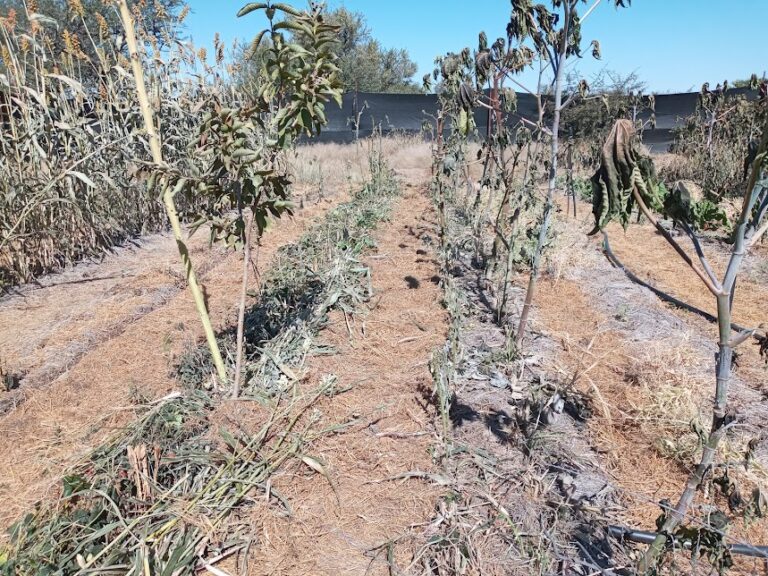
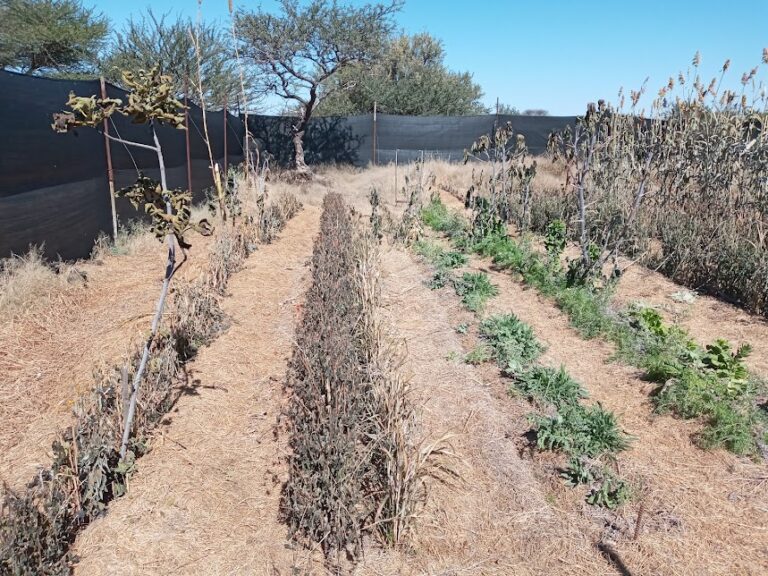
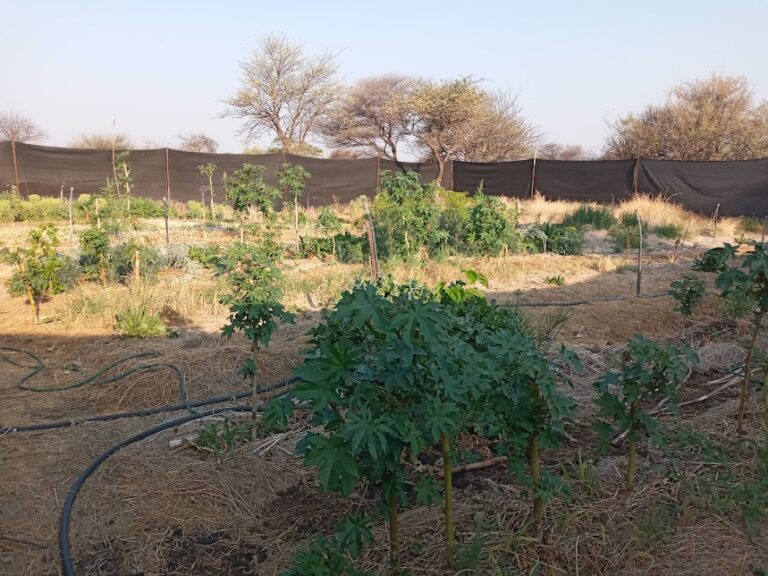
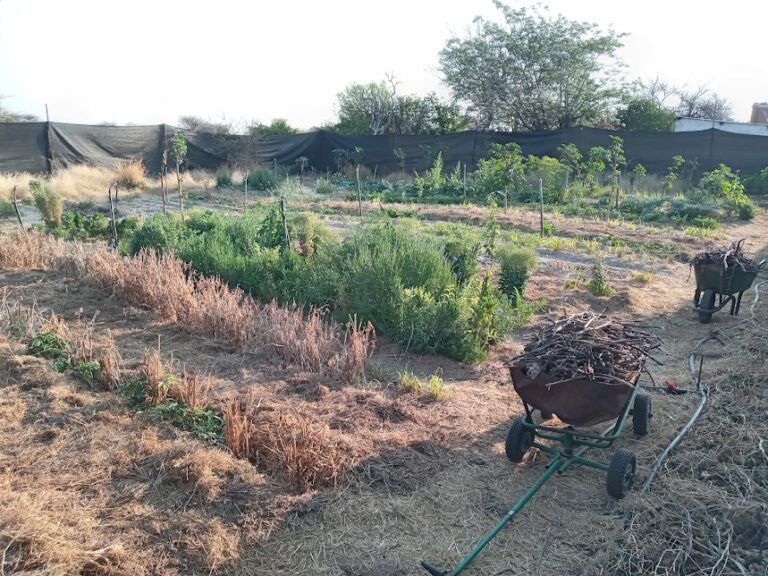

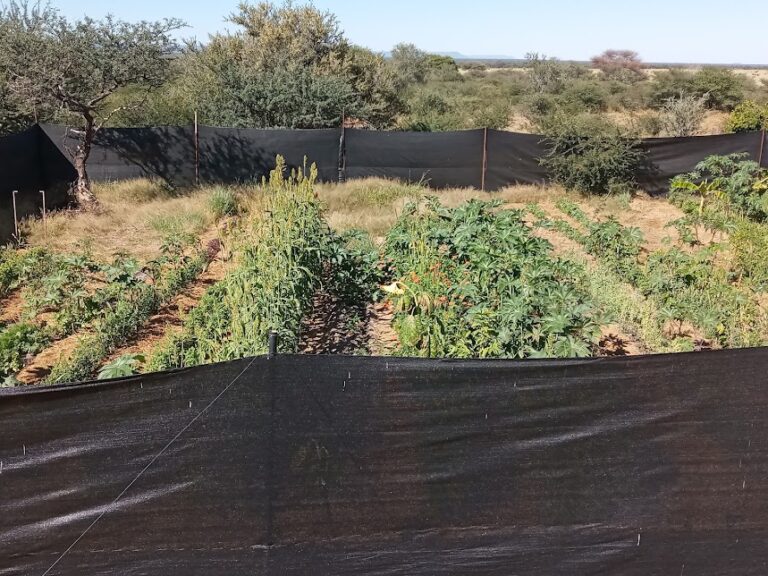


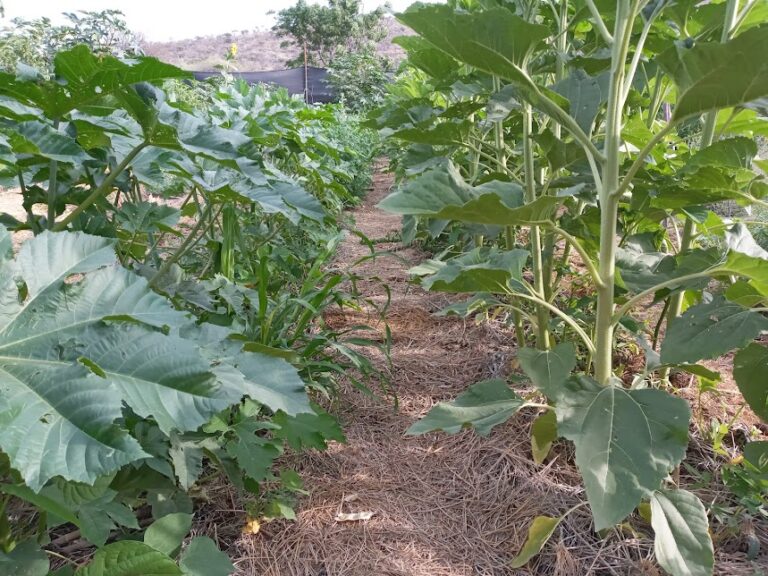
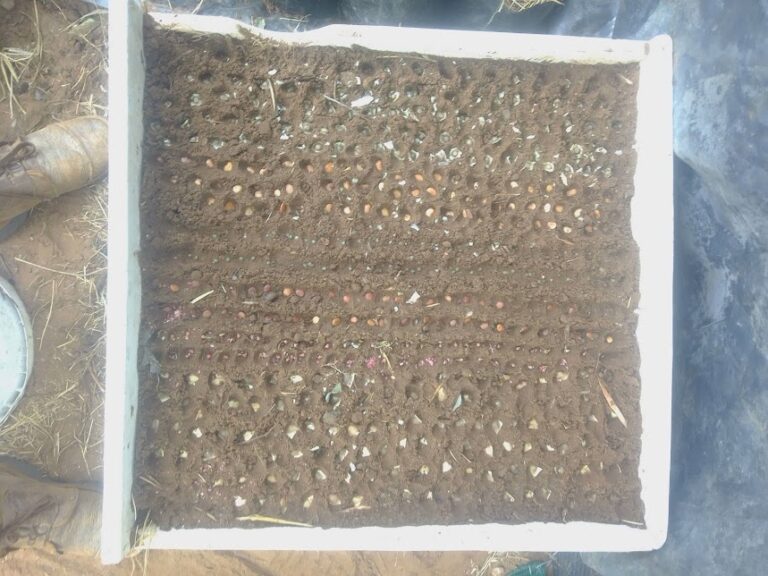
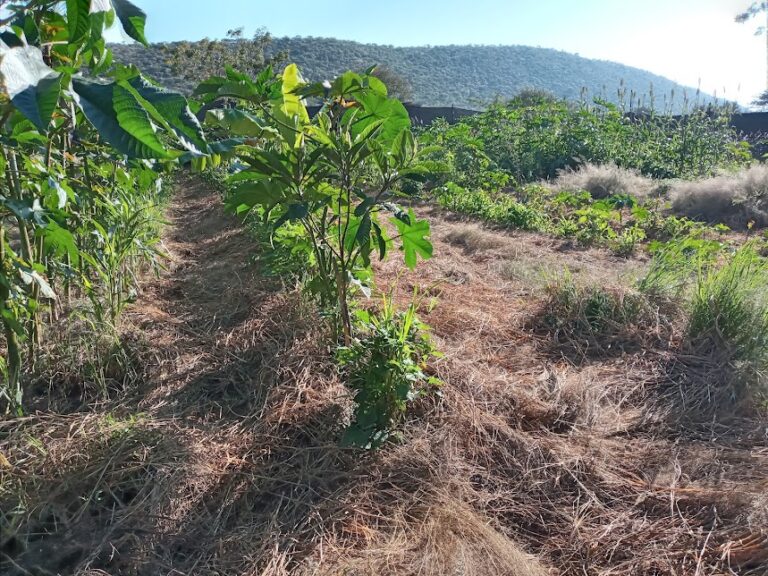
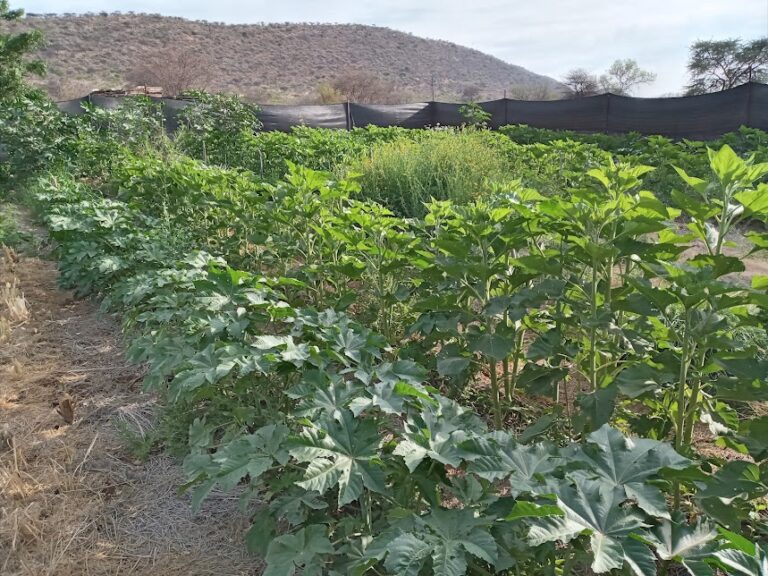
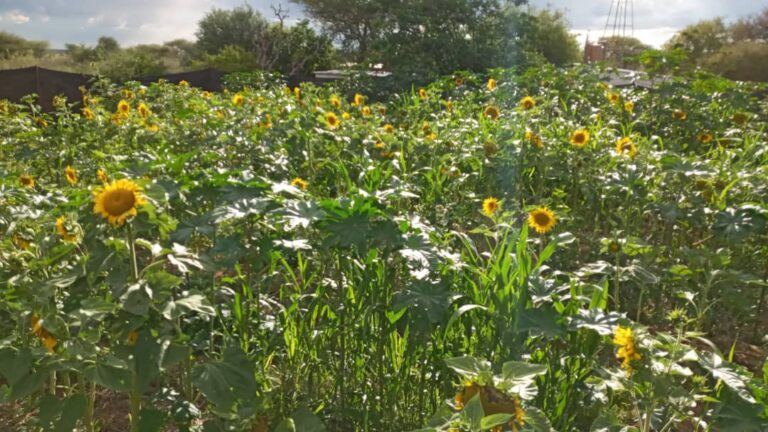

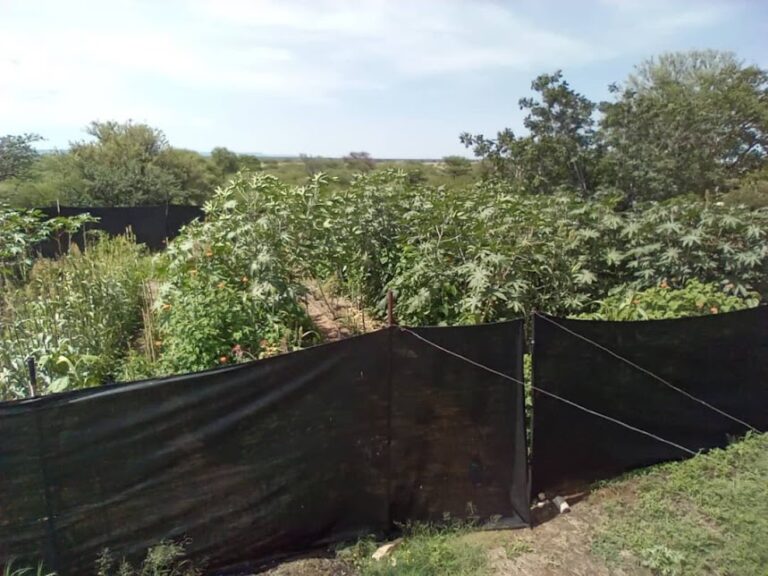
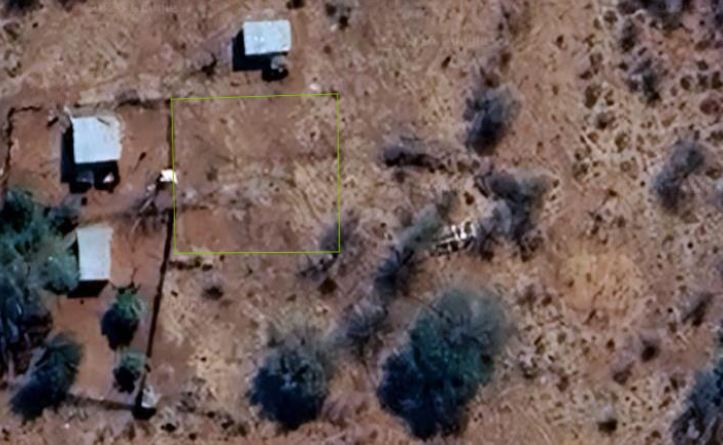
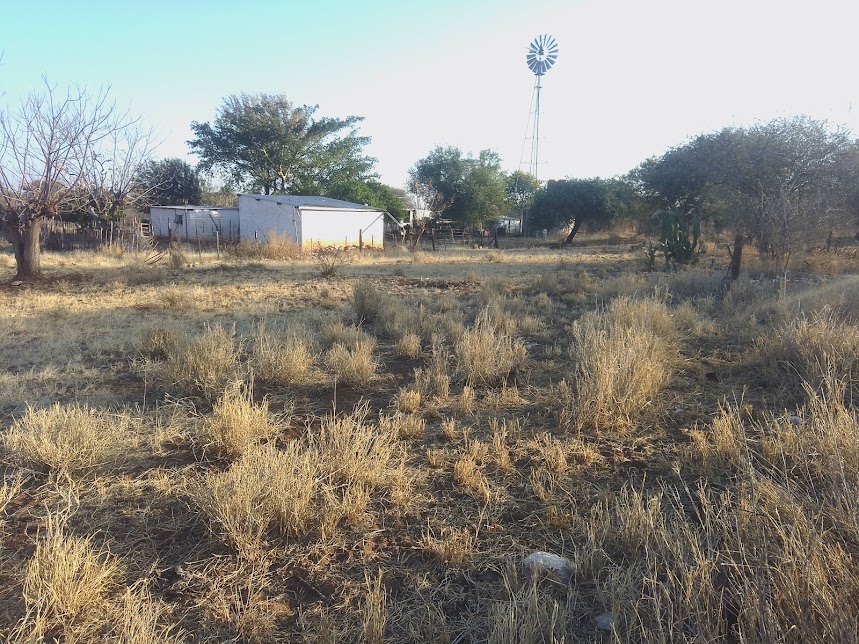
The Farm Oros is located northeast of Otjiwarongo in northern Namibia. This is the location of a small successional agroforestry “pilot-plot”, serving as a learning and experimentation garden to better understand how this approach could be applied in a local context.
What is succession in nature and why it is important: (a very simplified definition) When any given land is disturbed through fire, heavy storms or very often human interaction, etc. we end up with degraded soil or no soil conditions. This brings forth a quick establishment of “pioneering” plants that cover the soil.
They start to accumulate biomass, weedy and invasive plants, often fast growing and a very precise reaction to the situation. If this accumulation phase is not disturbed, it will continue until the soil and microclimate conditions are improved, in other words the microbiological processes in the soil are advanced enough for a high succession of plants to be able to thrive.
Now shrubs and other short-lived perennials will start to establish. This phase then builds on the previous, with more biomass accumulation but also much deeper root penetration as well as a lot more vegetative and woody growth above ground.
Attracting more and bigger life forms and fungi to be part of the cycle, always moving towards greater abundance and higher succession. At some point the succession will reach its so-called climax, supporting the largest life forms (trees and animals) this landscape can carry and eventually decay of old age, but in most cases, some form of disturbance will bring it back towards a lower successional phase. All plants on the planet can be framed with roughly 3 successional phases, and understanding this helps to recognize in what phase a landscape is when looking at the plants.
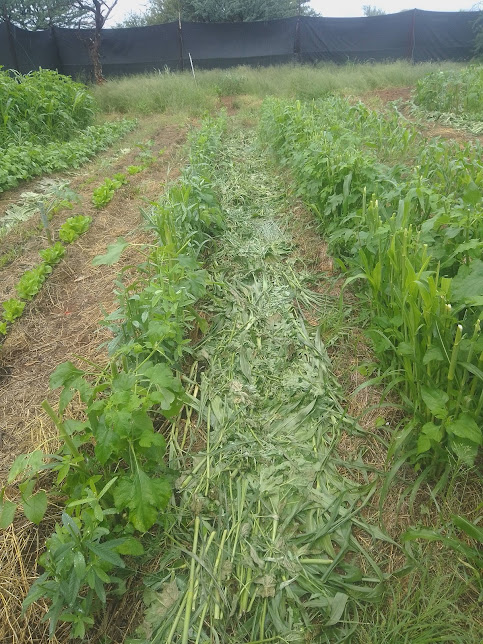
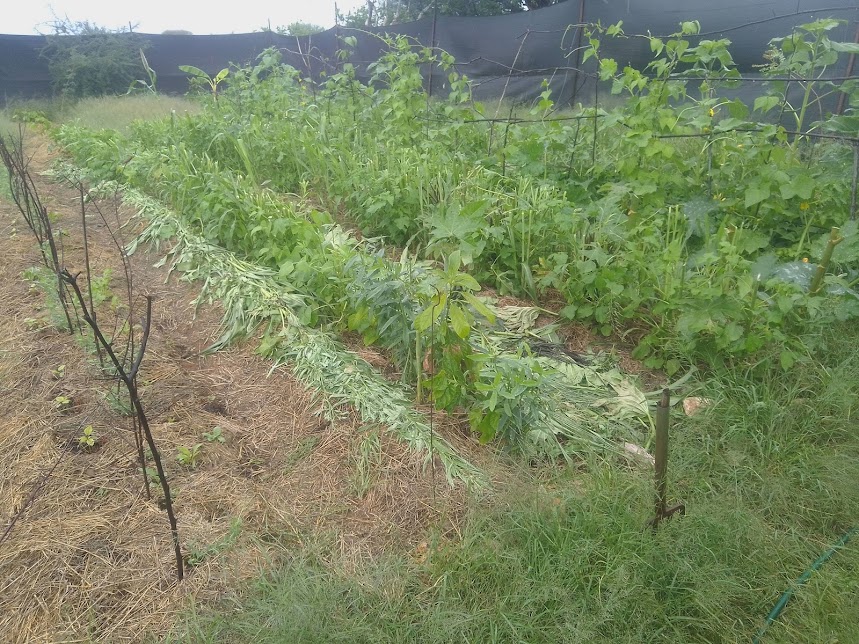
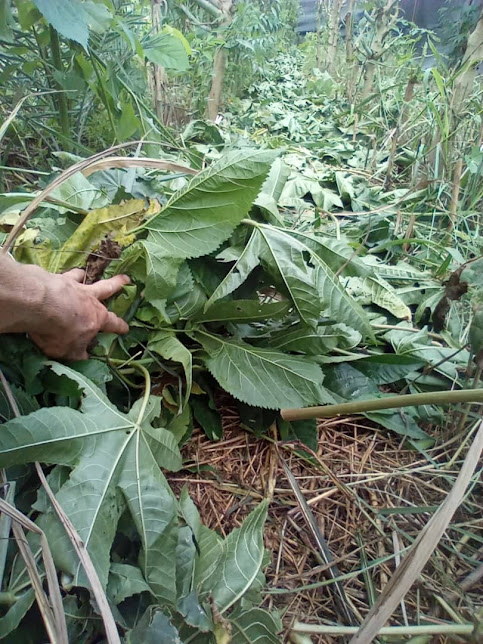
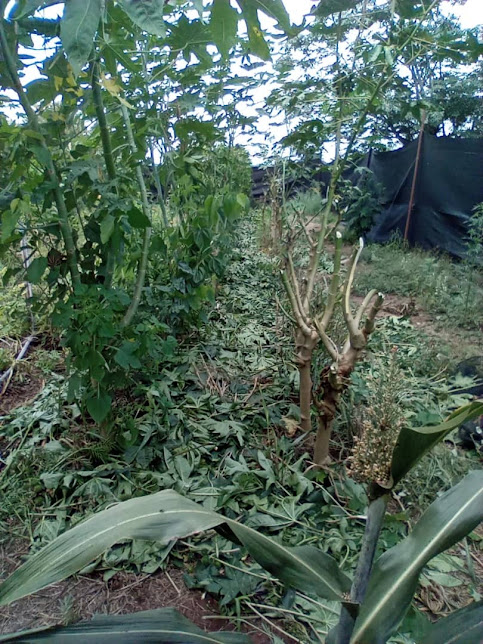
Successional agroforestry is consciously creating a plant community evolving into resilient, self-fertilizing and self-balancing ecosystems. Here are 5 principals which build the foundation of this approach: photosynthesis, biomass (accumulation), microclimate, diversity and succession. Choosing plants according to the conditions we need (in time and in space) and constant observation as well as interaction with these plant communities will lead to a strong system. So very dense and fast-growing plants can be chopped and dropped, so the soil life gets food regularly, organic material but also an increase in root exudates.
It is probably the fastest and most efficient approach in creating a self-feeding productive food-/eco-system. Knowing that we are entering a time of extreme climatic fluctuations as well as possible change or even collapse of the global supply chain in the coming decades, these systems will outperform most current agricultural approaches. And they can be re-set or re-orientated almost at any stage to evolve towards a different goal/output, regenerating ecosystems and services not just soil!
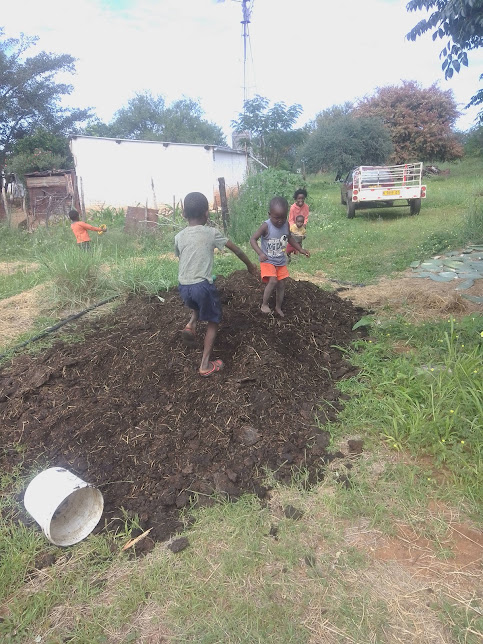
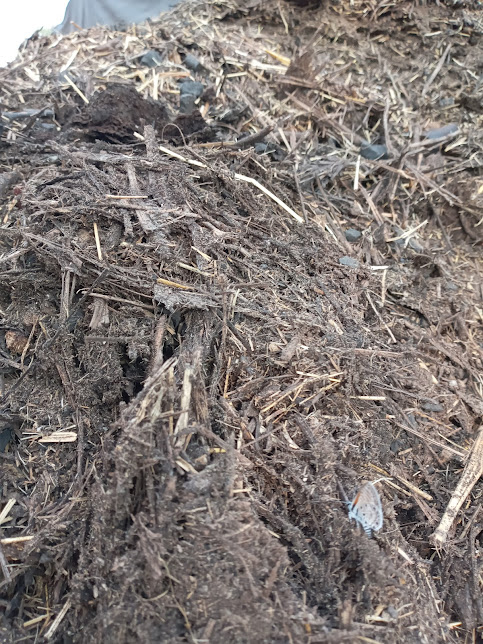
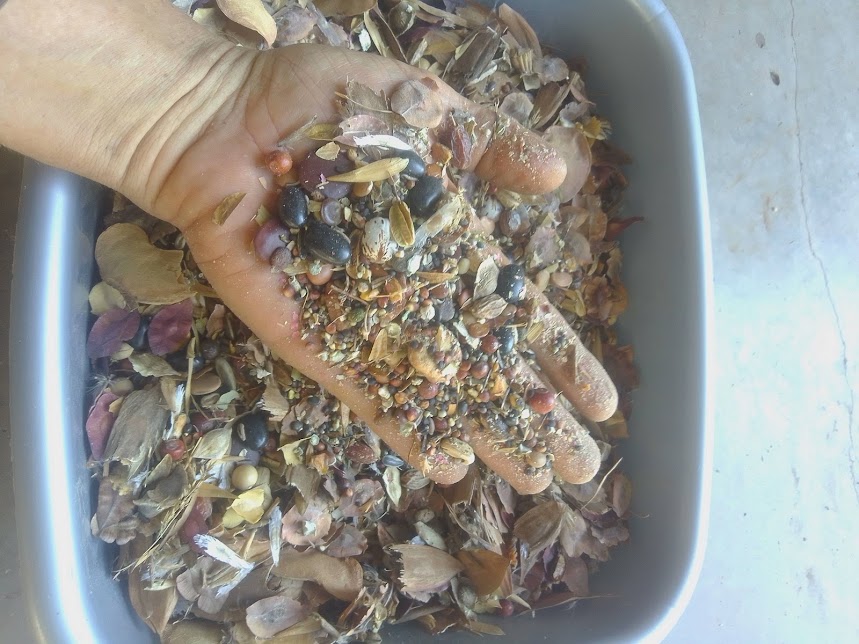
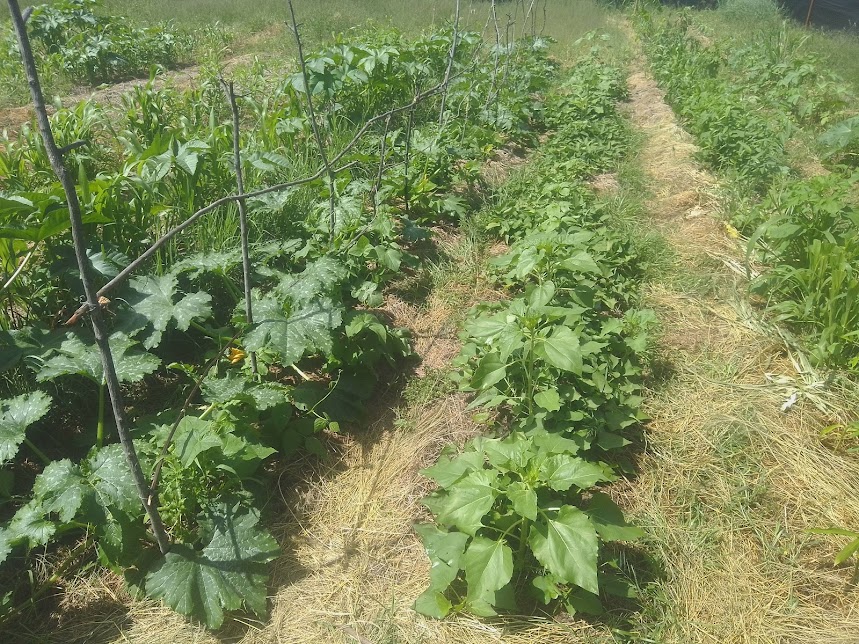
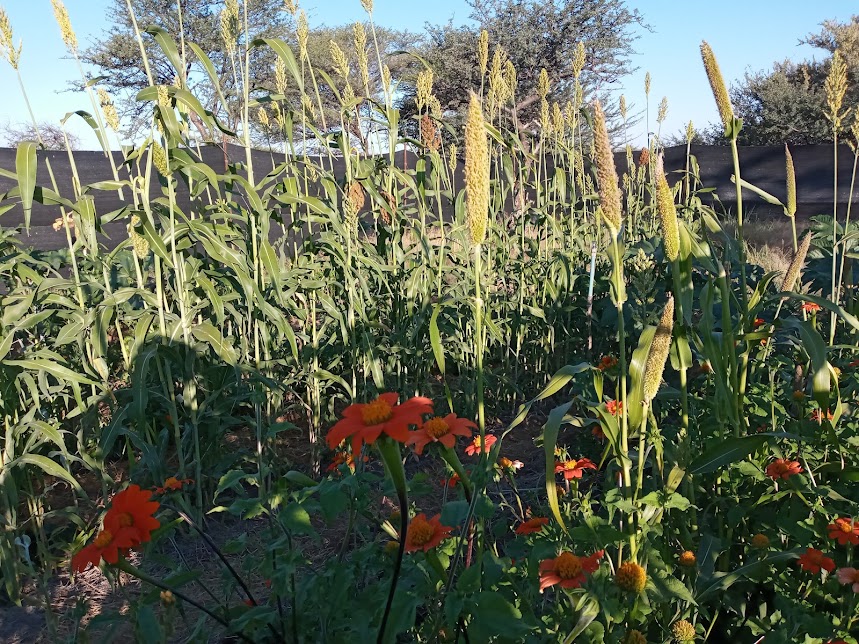
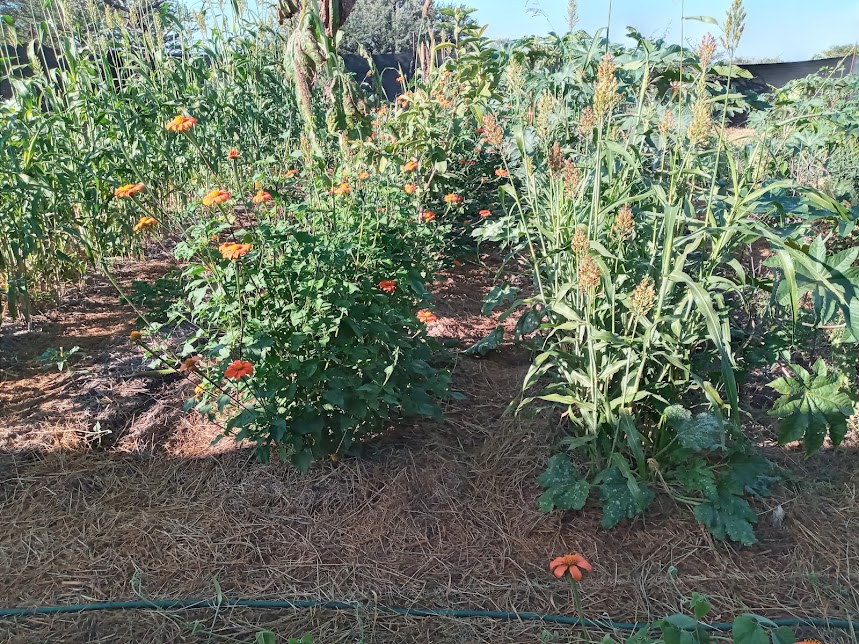
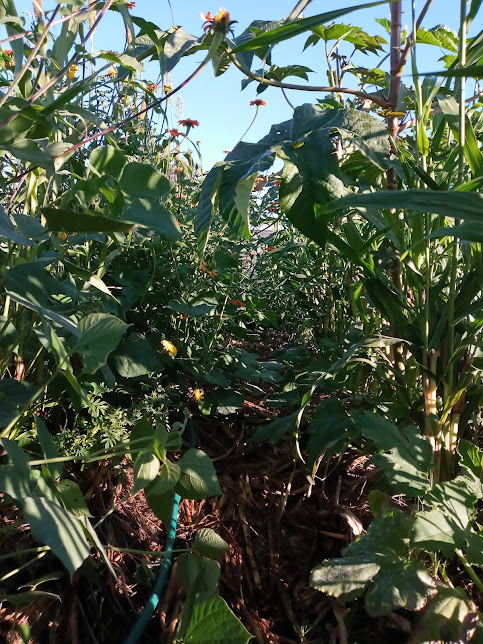
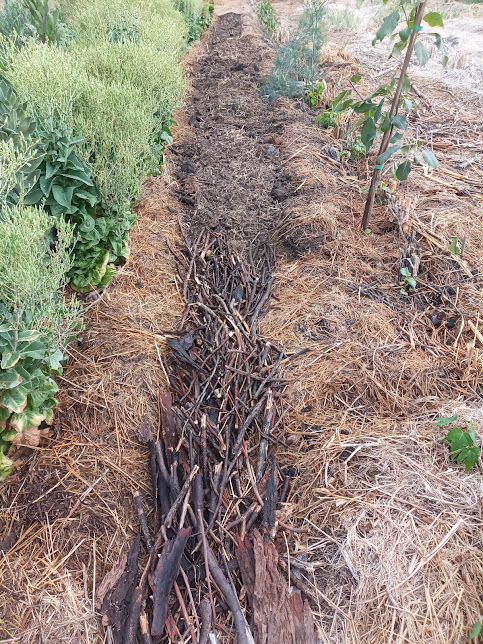
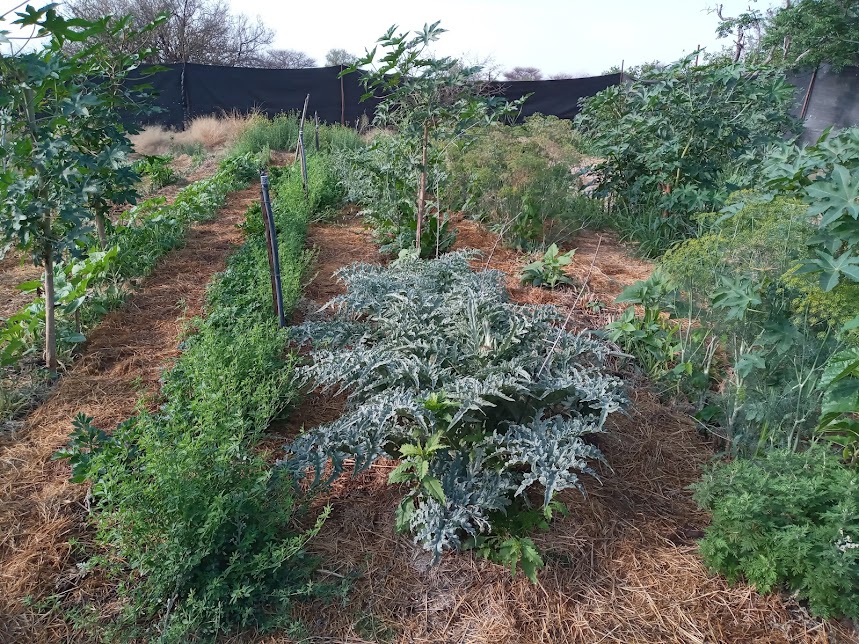
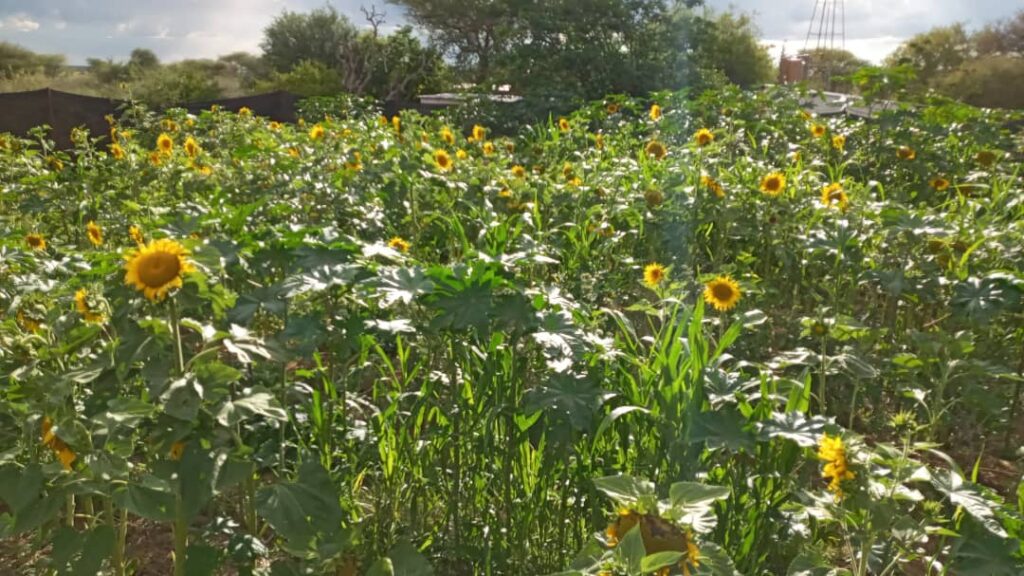
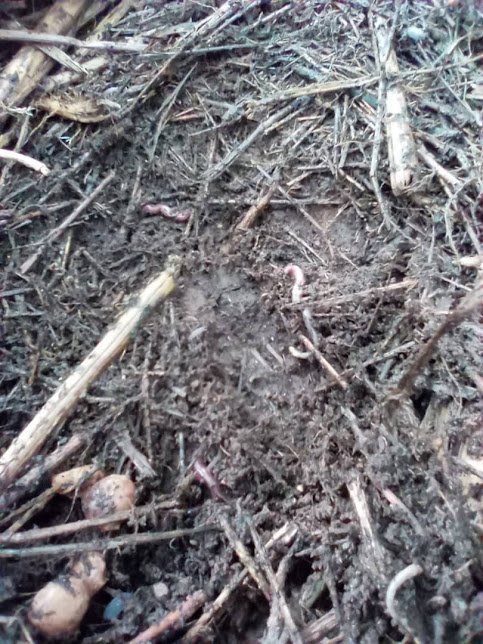
The purpose of this garden: for now, it is a learning site, trying out many different plants (high diversity) at very high density and observe which could potentially be the best for the pioneering phase of agroforestry production systems in Namibia. The plot is irrigated and fed by “local inputs” like biochar manure mix (biochar brought into the cattle kraal) and straw (not fit for fodder anymore), which speeds up the first 3 important principals that ultimately lead to an active soil microbiology.
Photosynthesis, feeding life in the soil through root exudates. Microclimate, shading the soil from UV, keeping soil temperatures stable and reducing evaporation. biomass accumulation, creating organic material to feed the soil life.
It is possible to build such a system without any inputs right from the start, this will be quite slow in our Namibian context, but I felt that in many cases we will have access to manure, grass or leaf mulch and anyone with some small twigs or other woody material can also make their own biochar easily. These “external” inputs can help shorten the pioneering/ placenta phase drastically and most of our livestock kraals are actually polluting the ground water because of these high concentrations of nitrate (enormous, untapped potential).
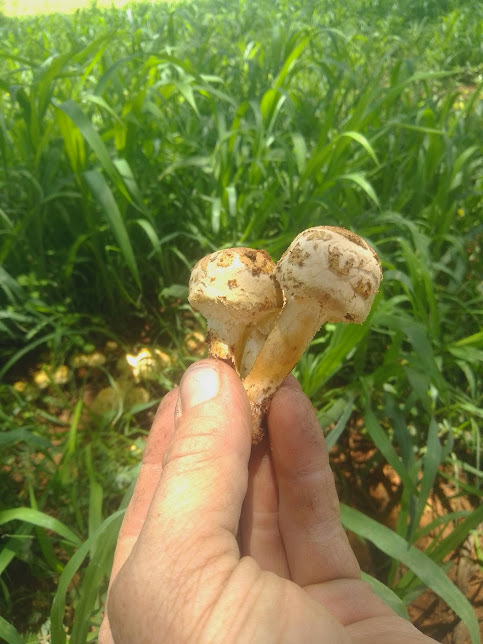
Eventually this garden will be tuned towards a small production system of a high diversity with berries, fruit and Medicinals.
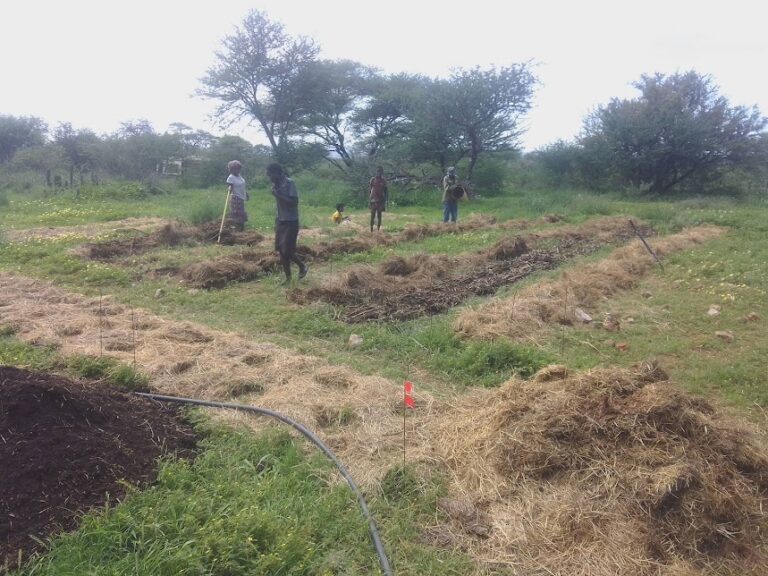
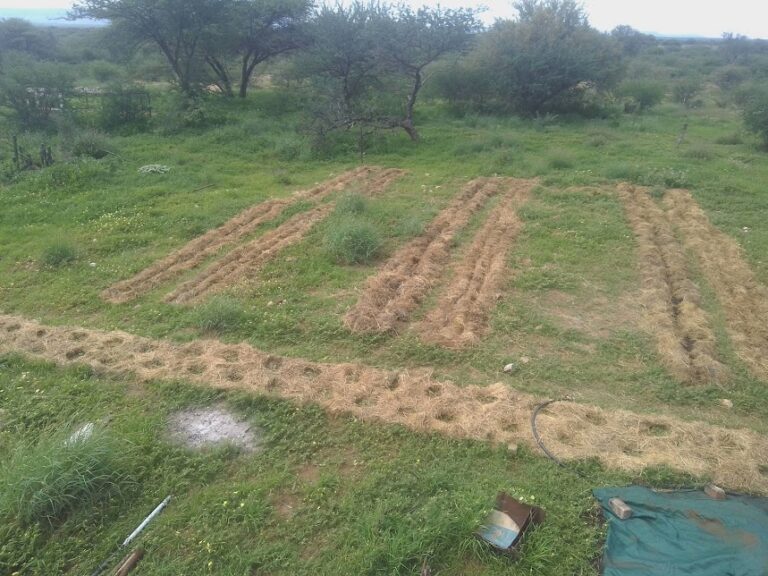
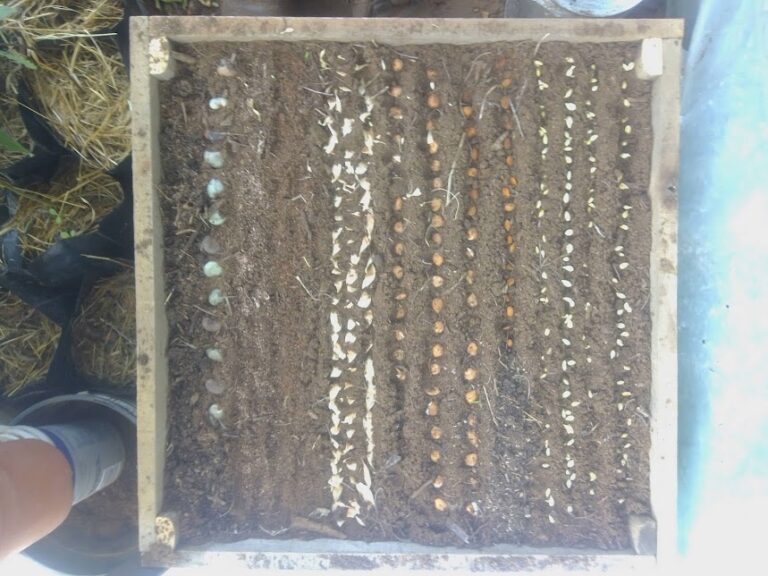
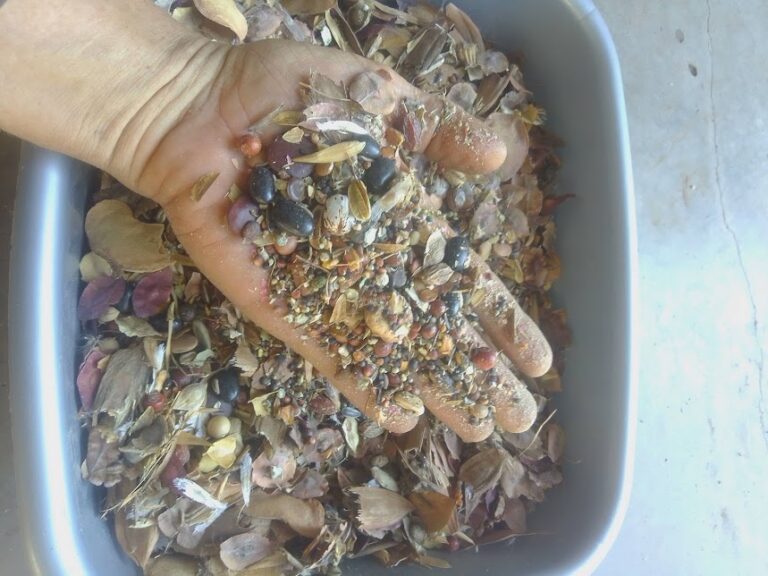
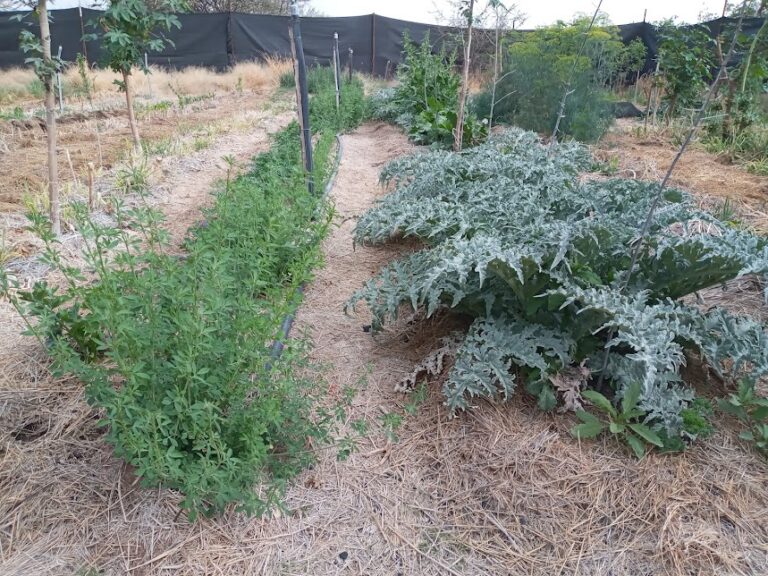
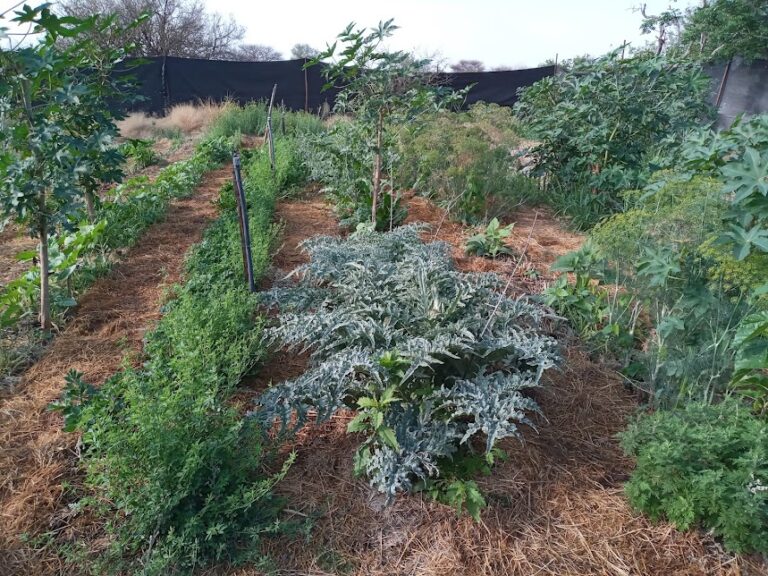
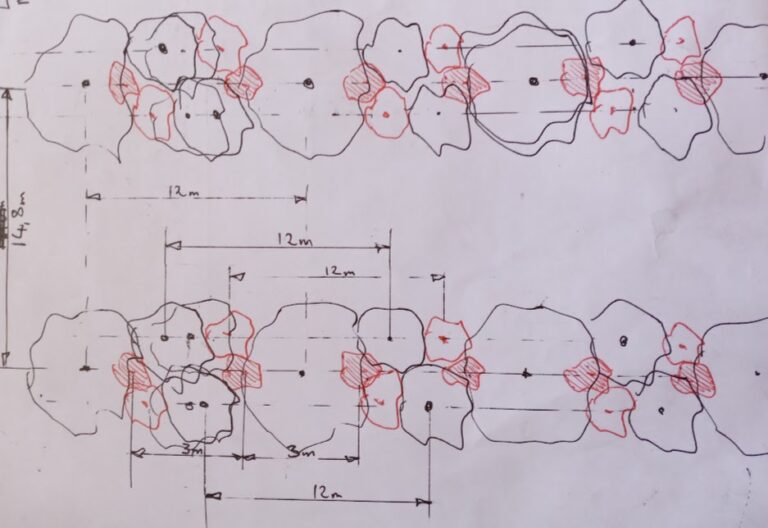
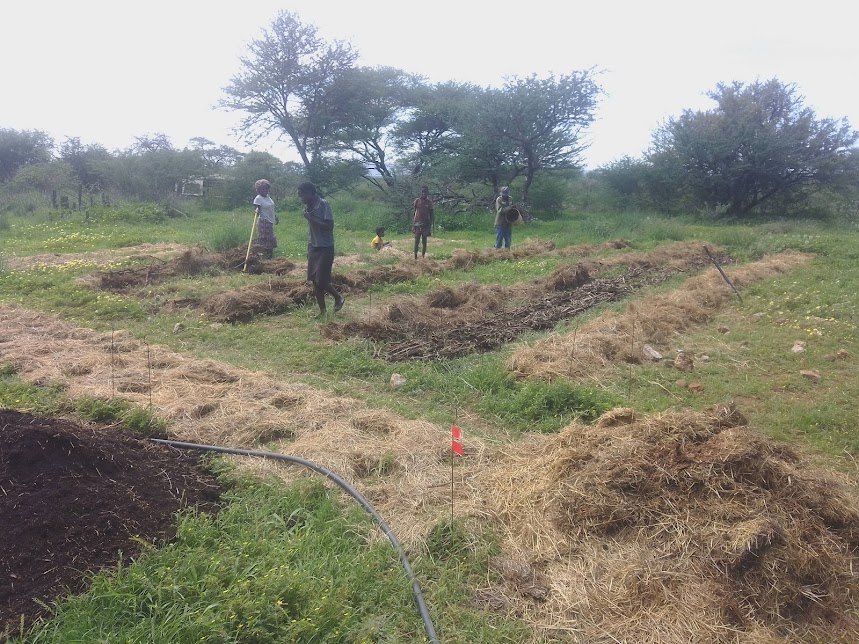
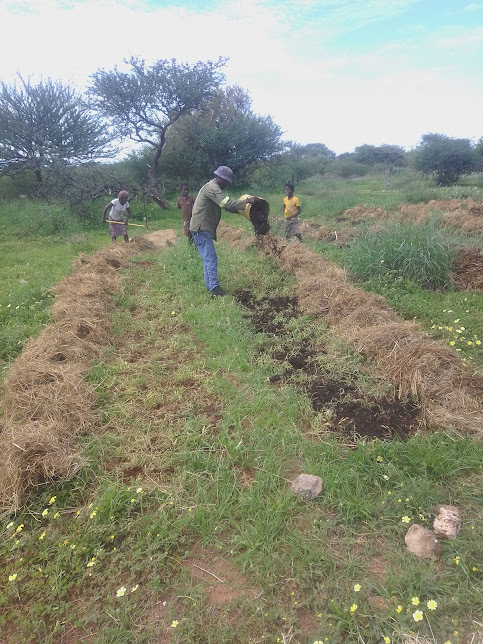
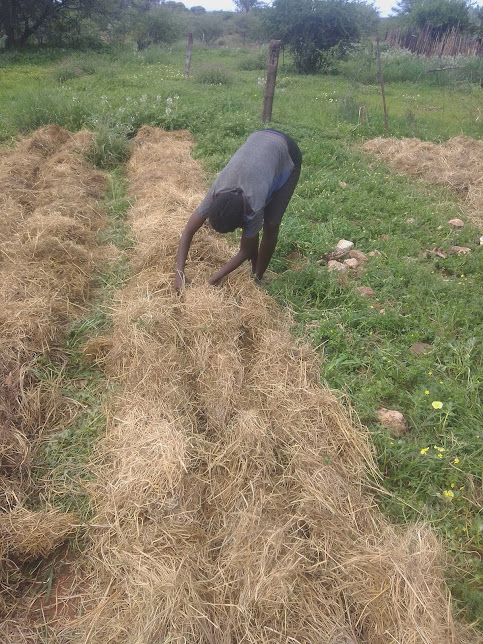
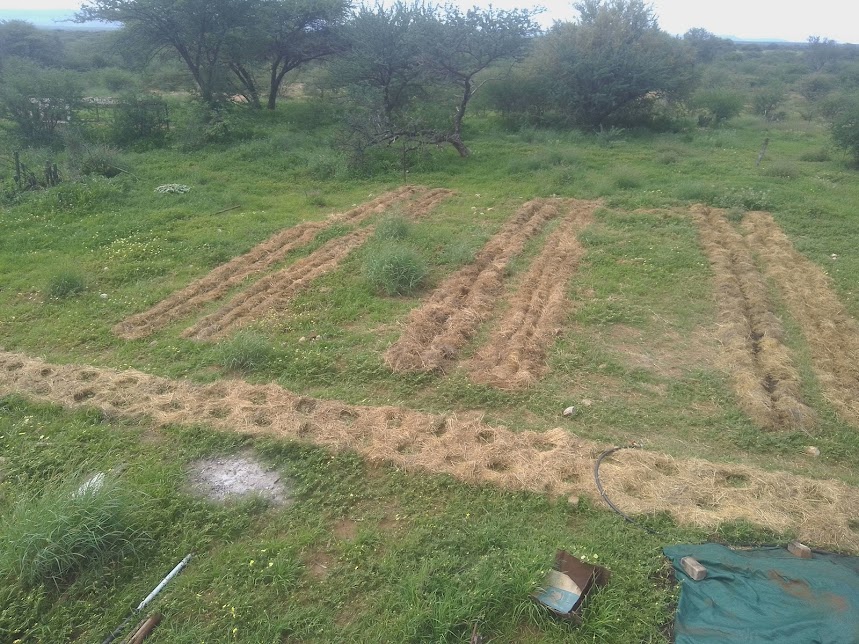
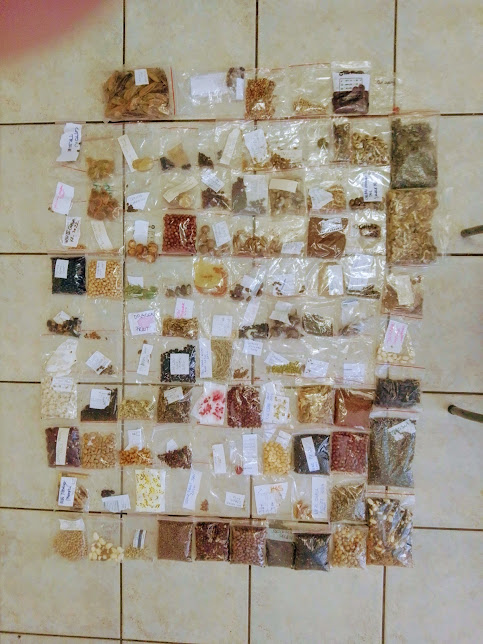
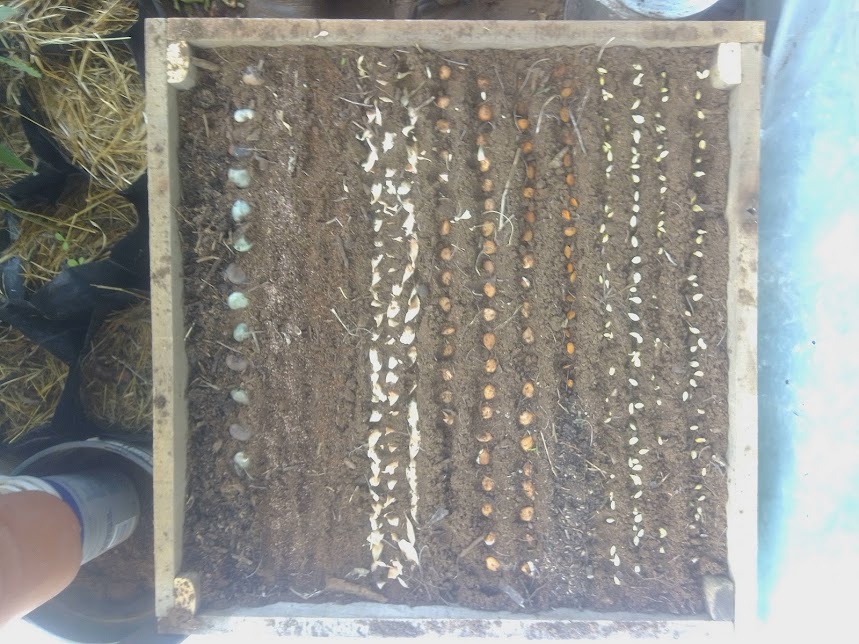
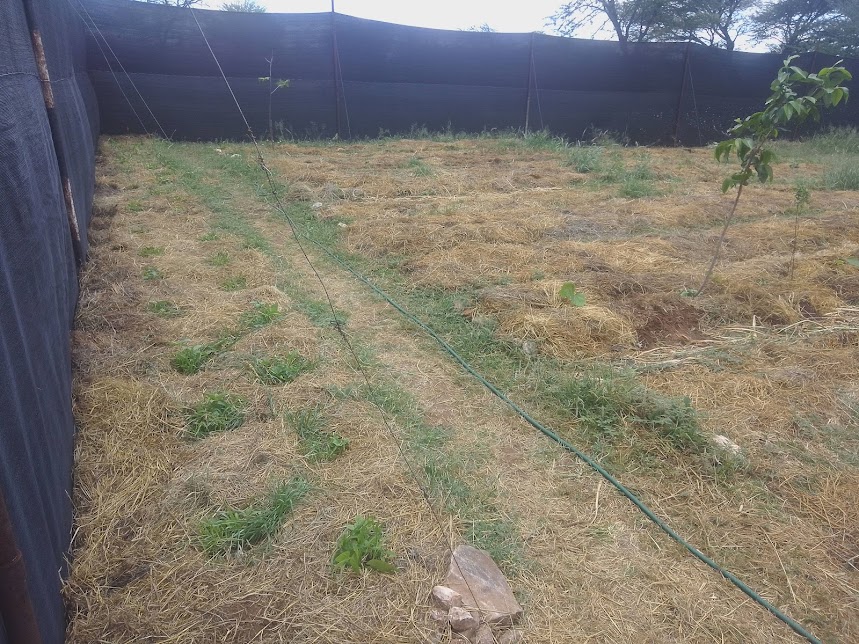
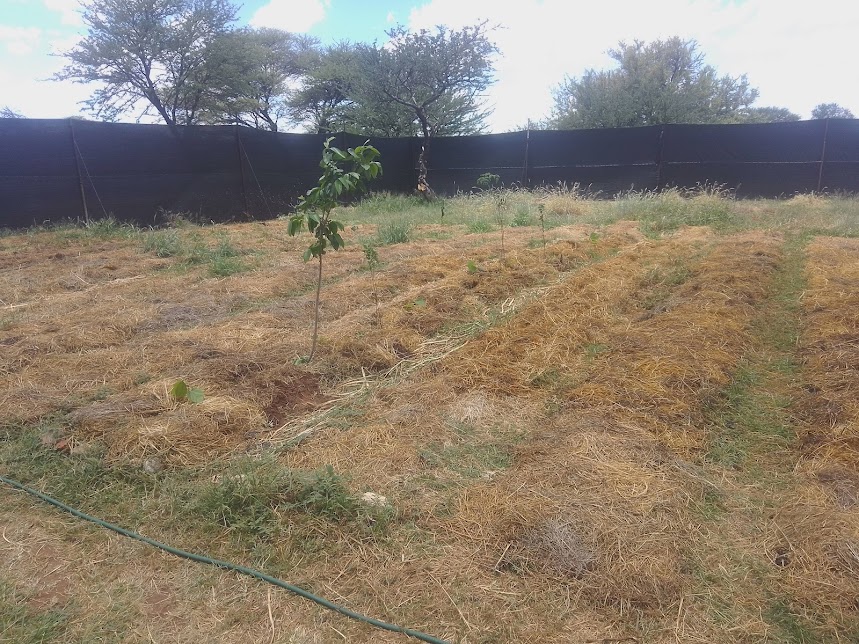
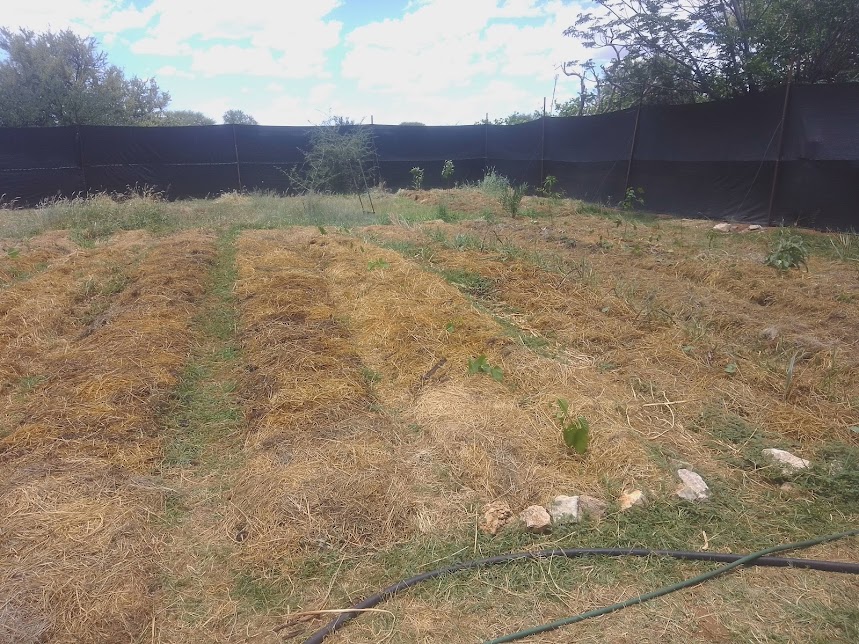
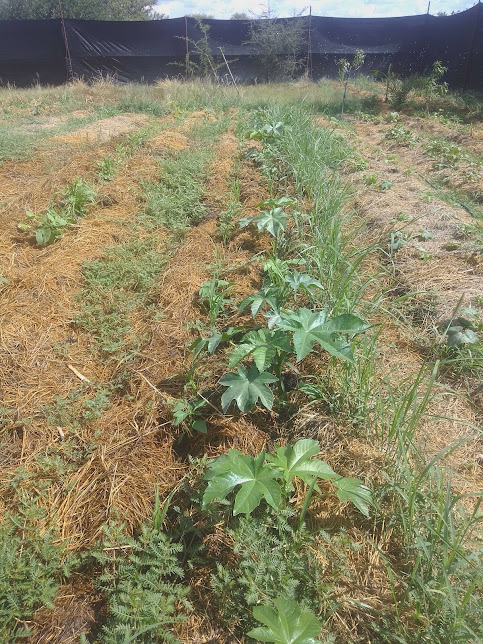
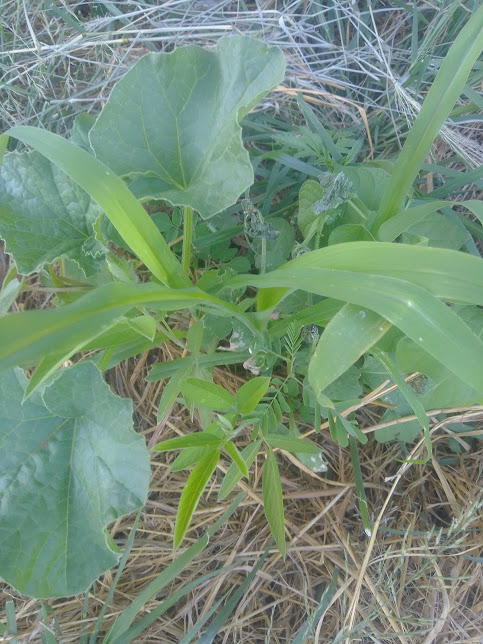
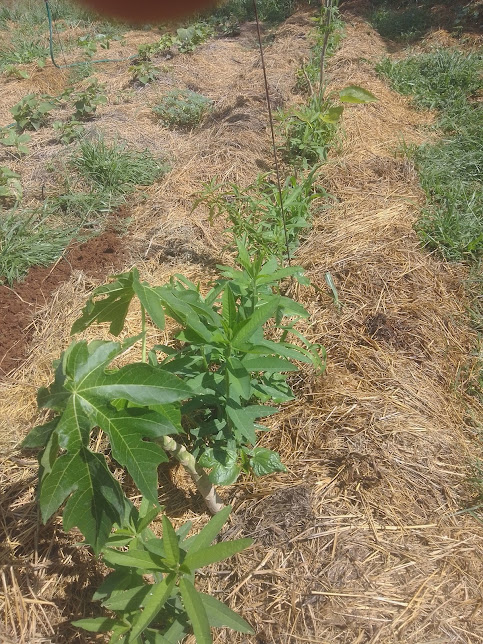
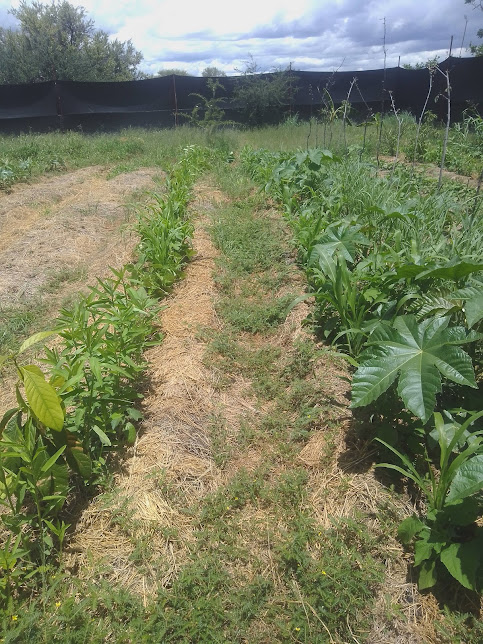
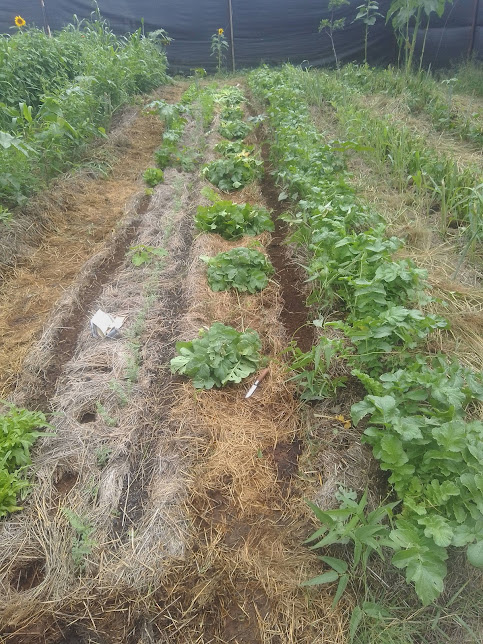
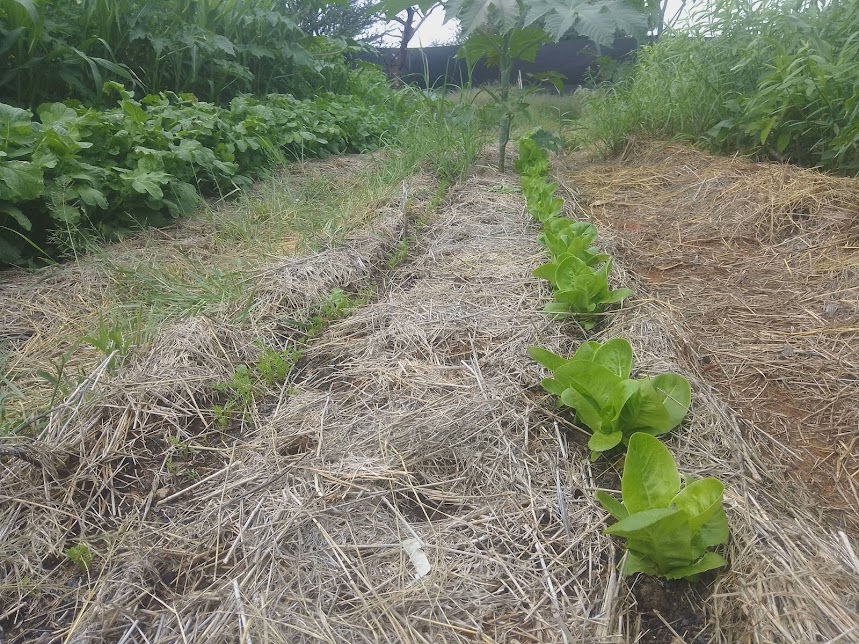
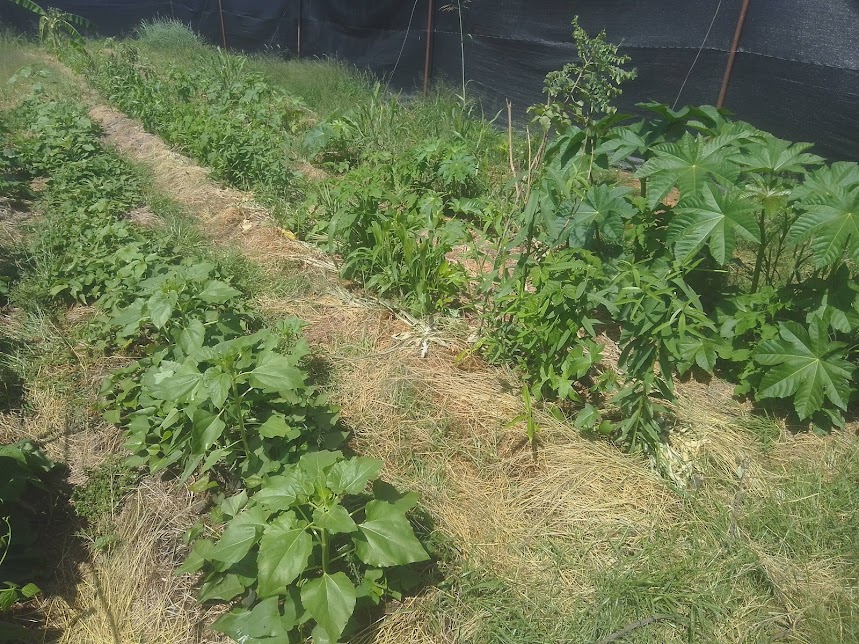
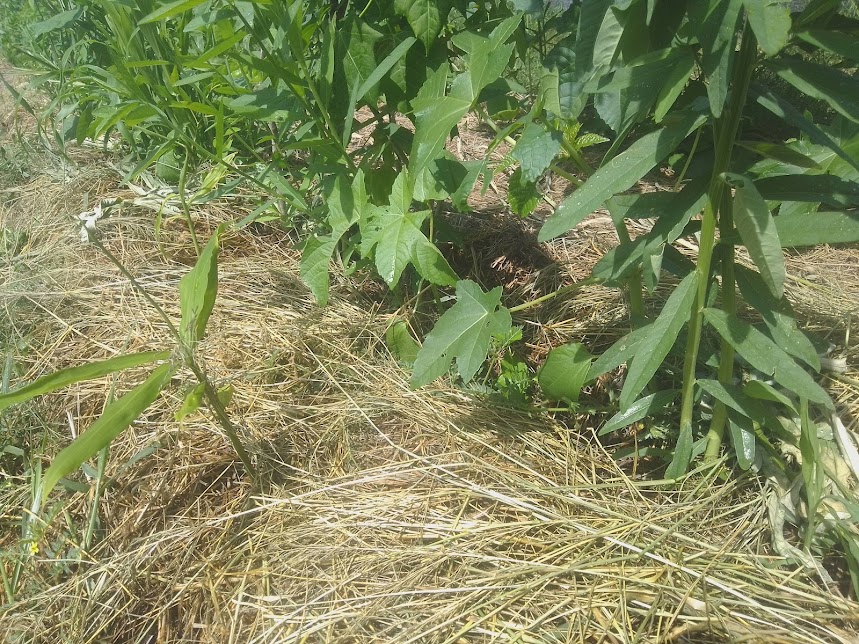
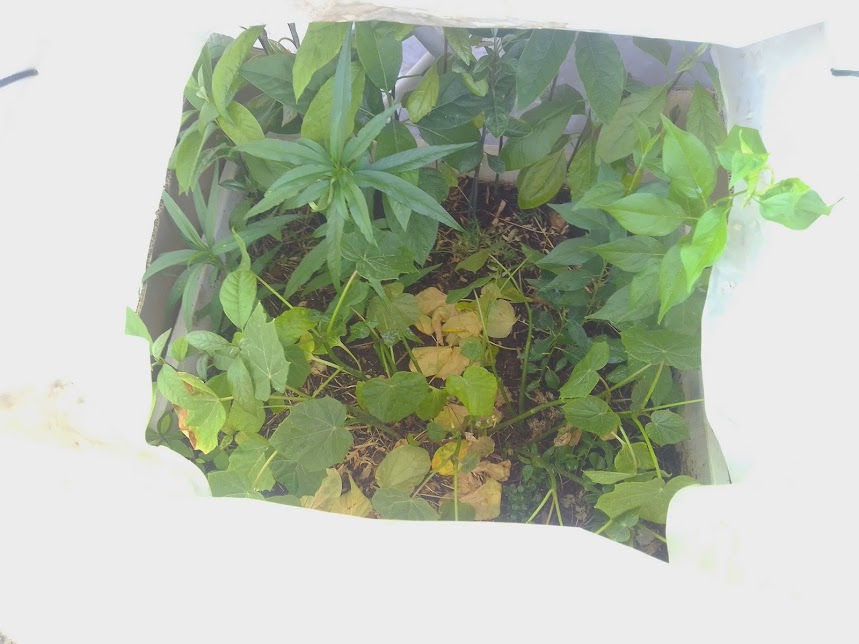
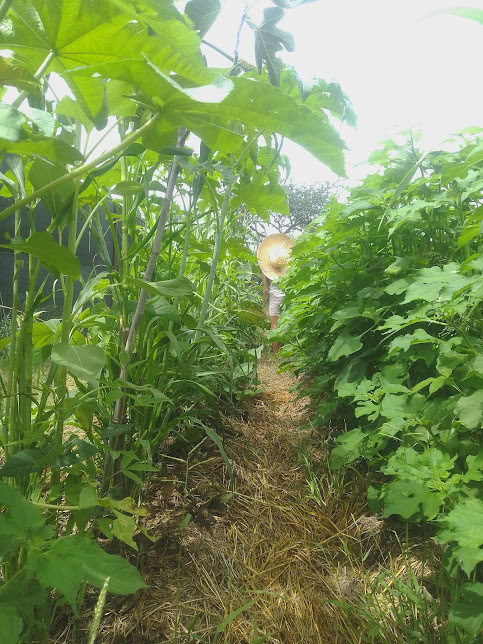
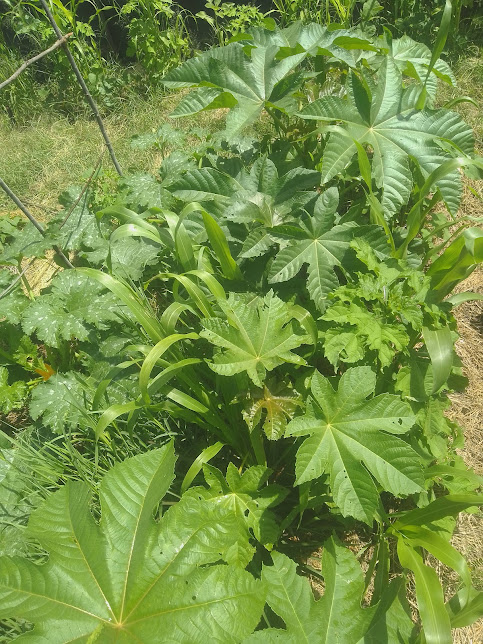
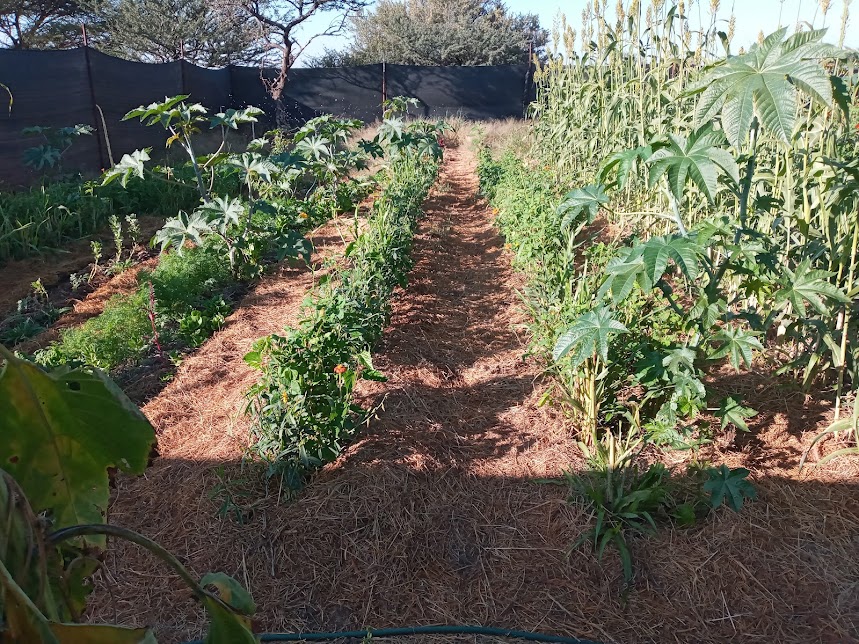
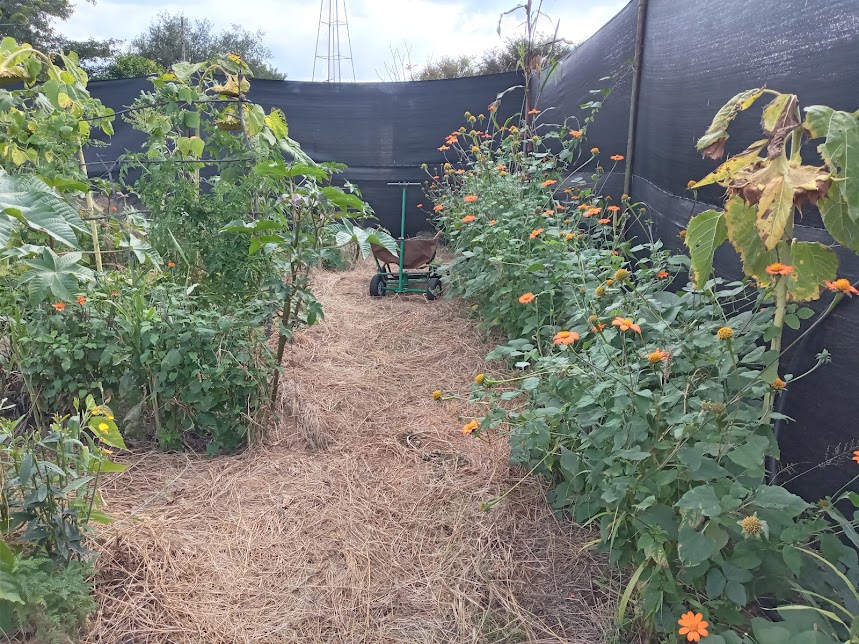
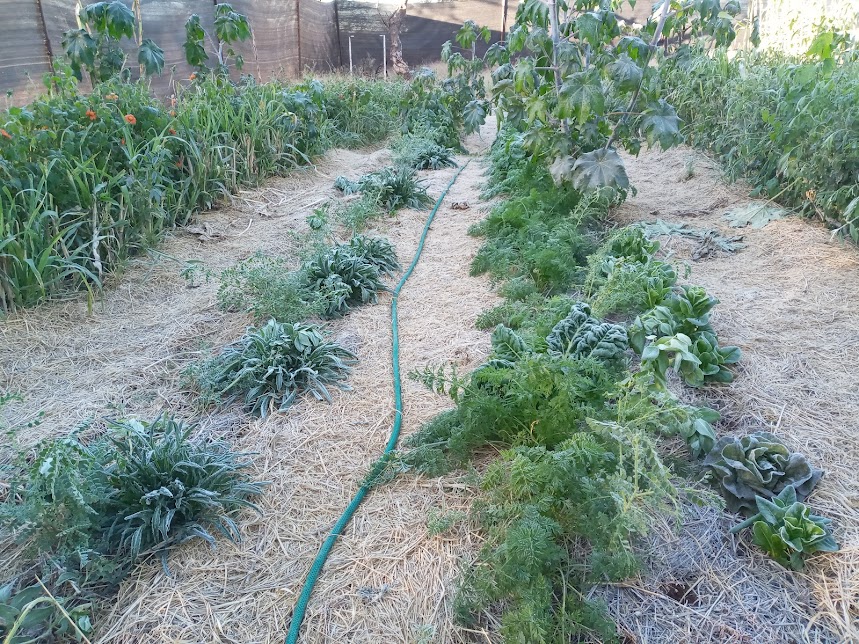
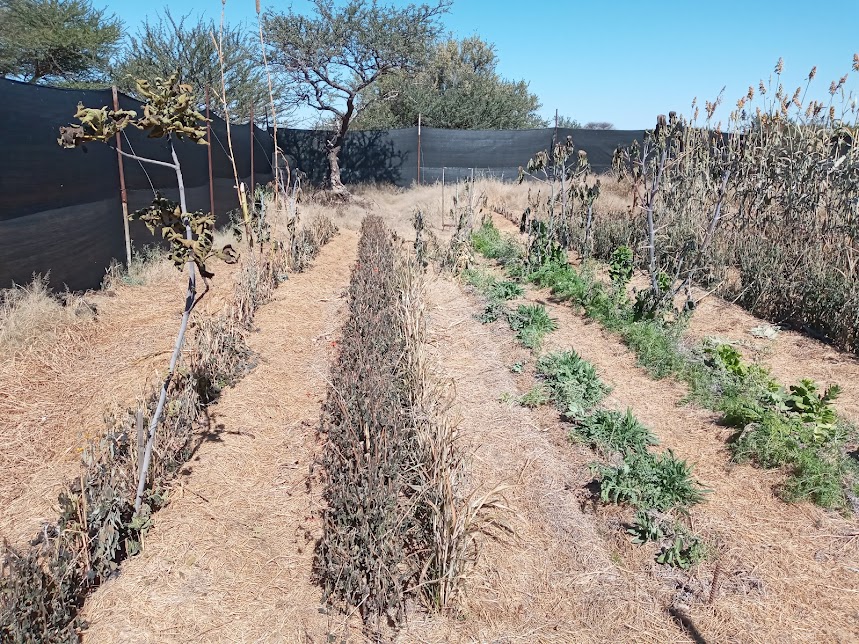
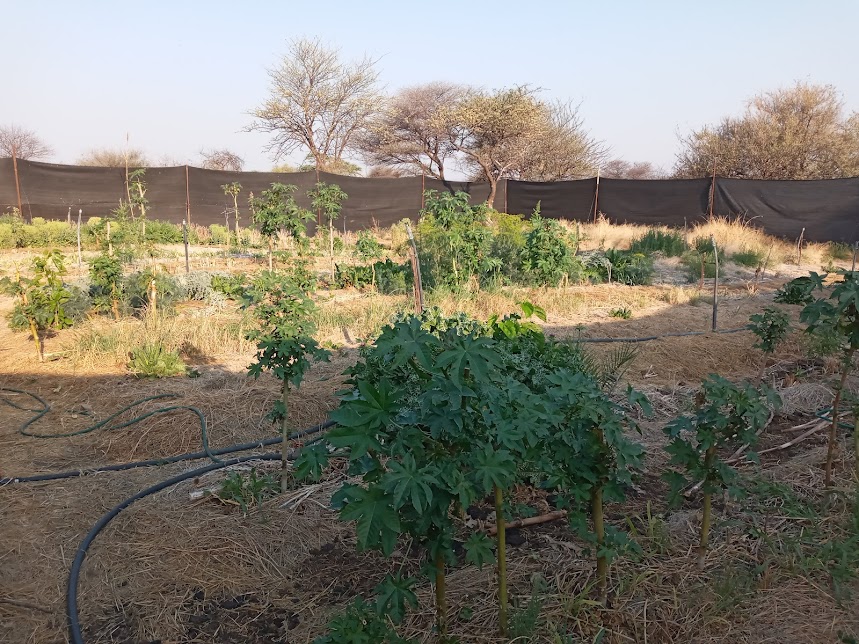
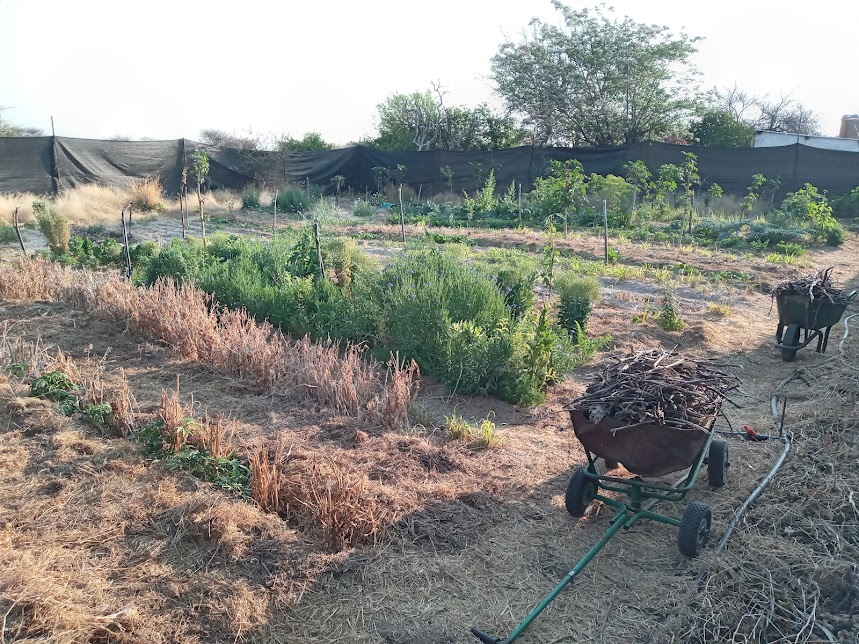
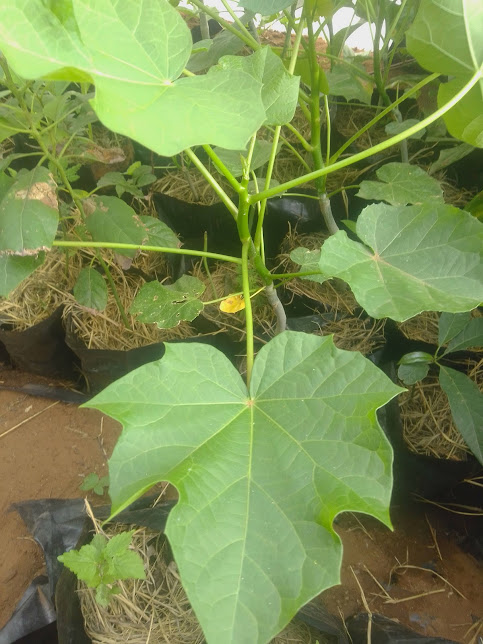
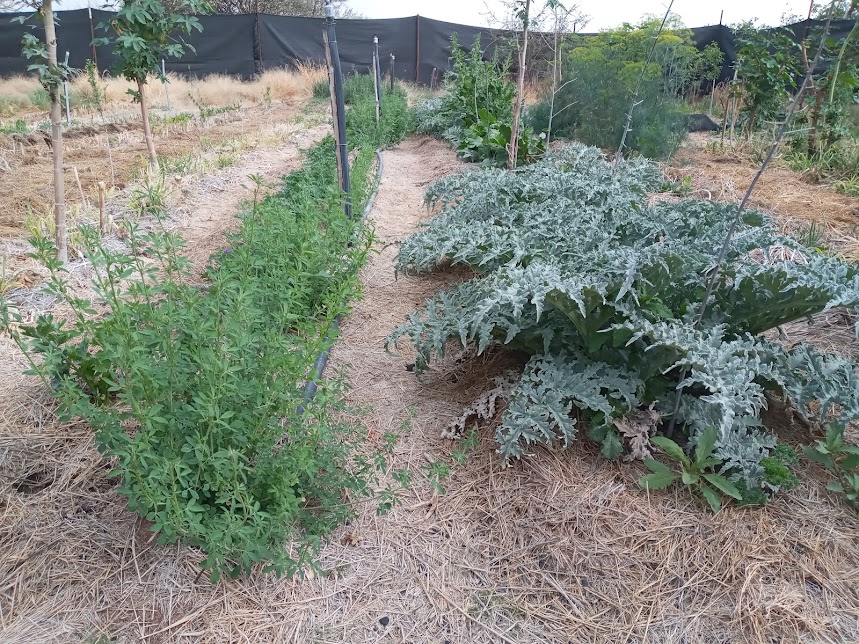
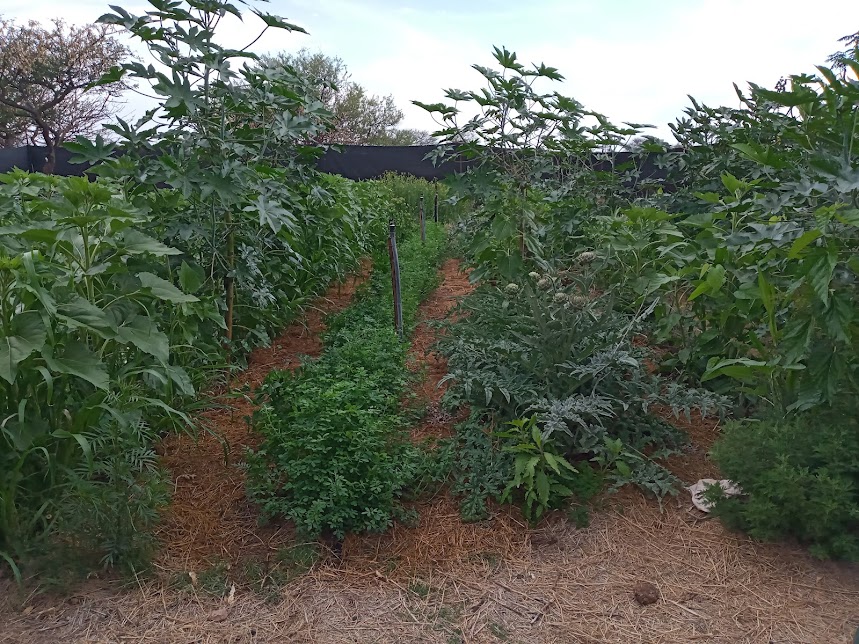
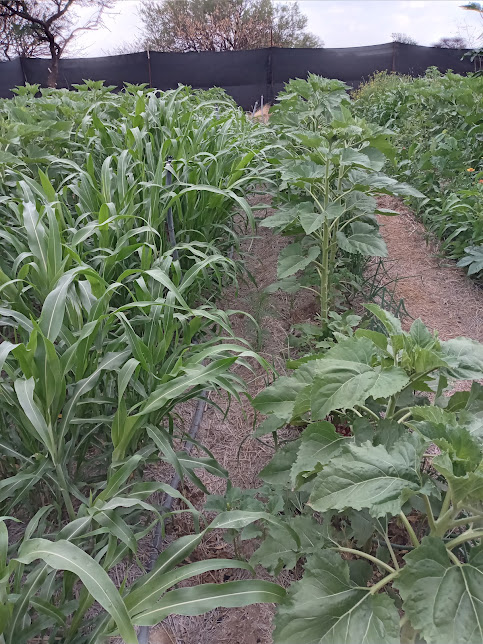
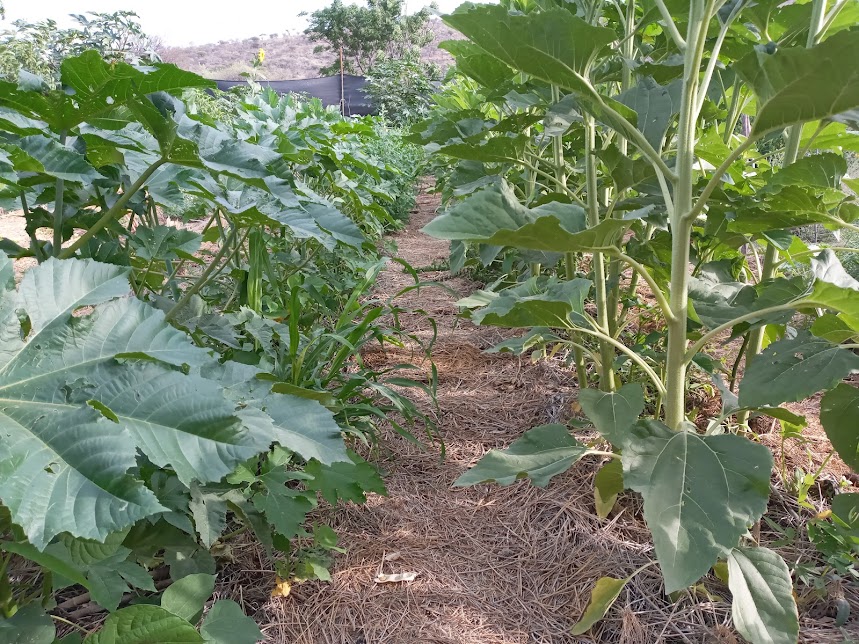
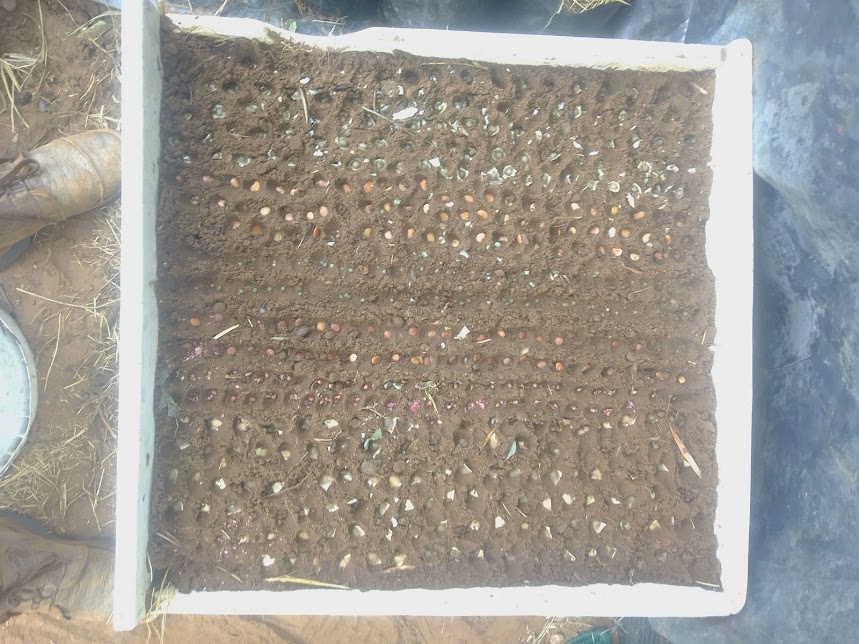
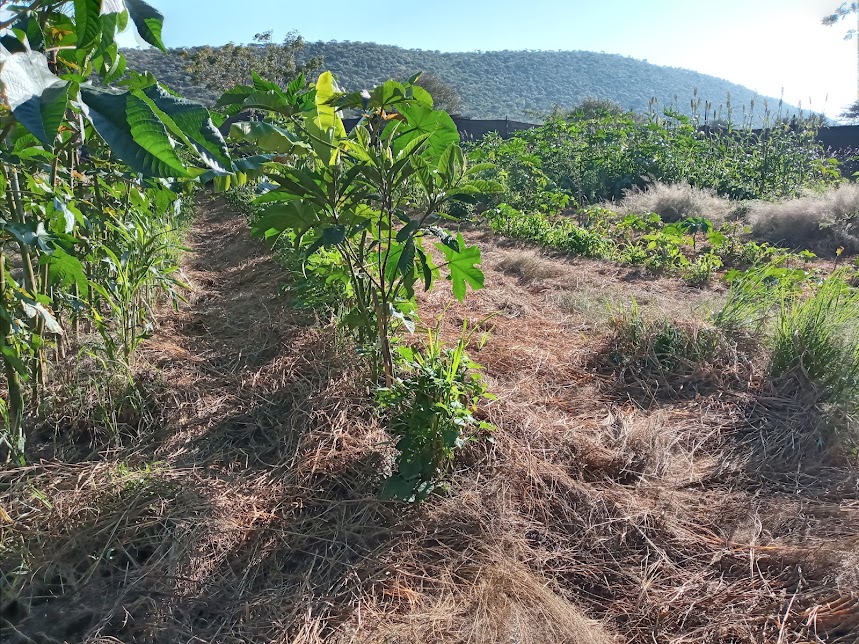
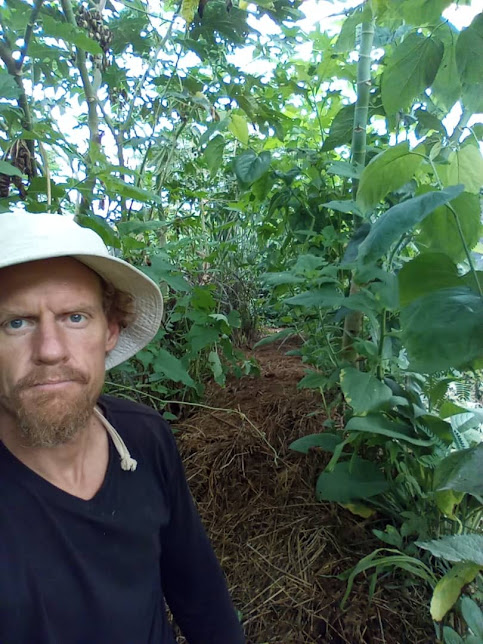
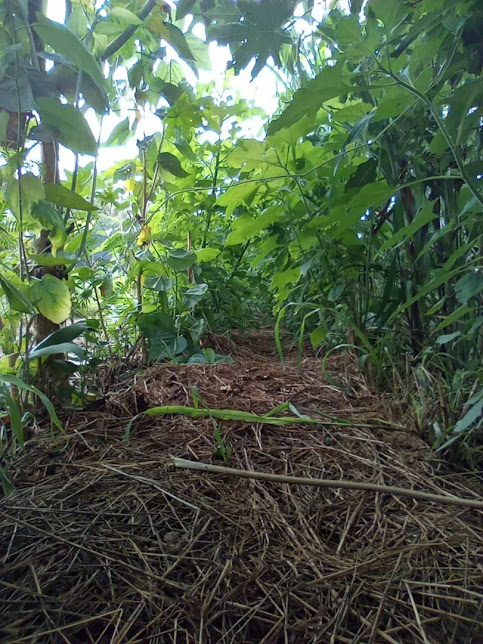
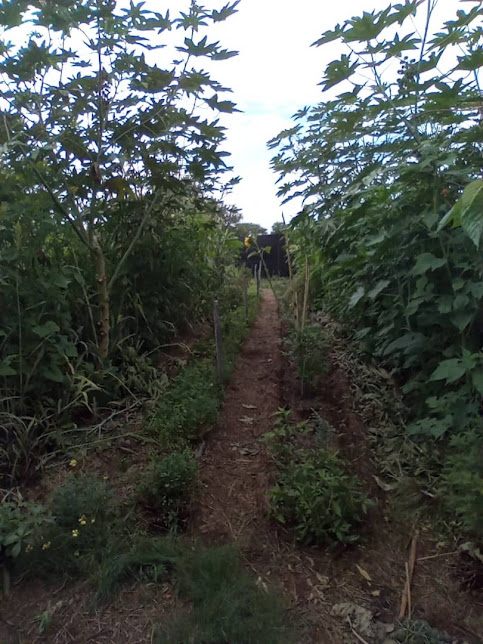
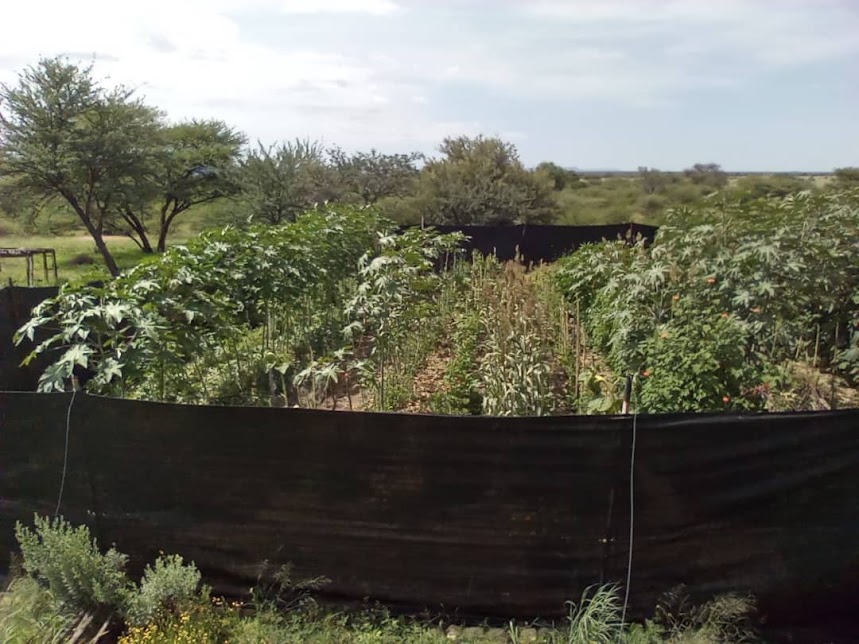
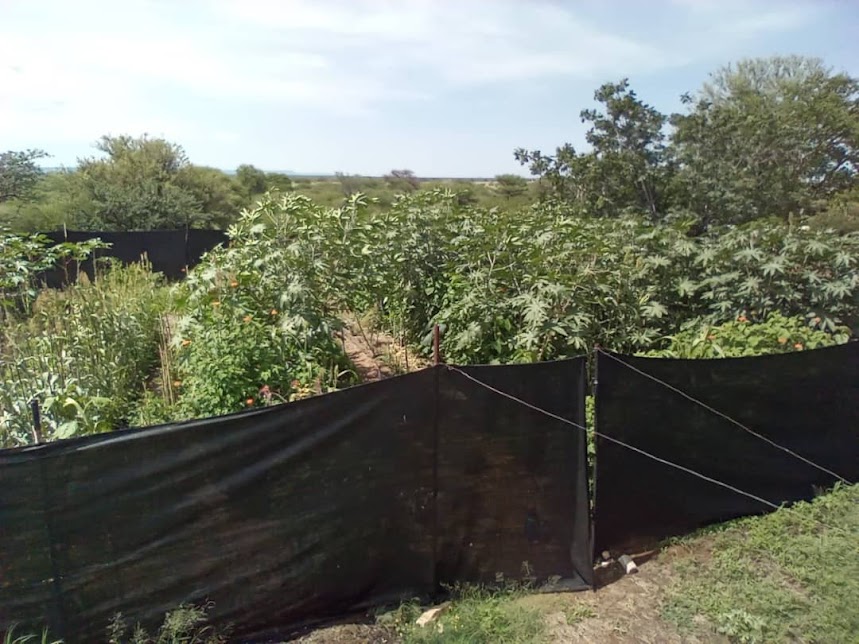
Setting up the garden: in January 2025 we started to prepare the grounds for the pilot plot. all tree-, biomass-, and vegetable rows were marked out and then loosened up with a broad fork. Then the tree rows and biomass rows were covered in a thick layer of cow manure biochar mix and then mulched thickly with old straw. Next, we started to seed out all of the tree rows with a very diverse mix of fast annuals and supporting perennials which became the pioneering phase. We did also plant in a high density of mulberry cuttings, and an array of seedlings as support species as well as some small fruit trees all grow from seed.
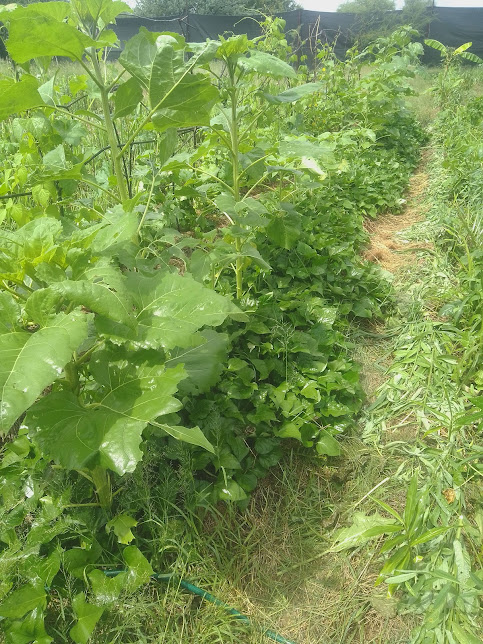
We seeded out the biomass rows (west of each tree row), with mainly grasses and other fast and prolific growing annuals and some biomass perennials. These rows are planted as chop and drop biomass for the tree rows, but they also help to create the overall microclimate very quickly.
Then we mulched all the pathways and prepared all the interrow/ veg rows with the cow manure-biochar mix and mulched them slightly and then we seeded out most of our favourite vegetables.
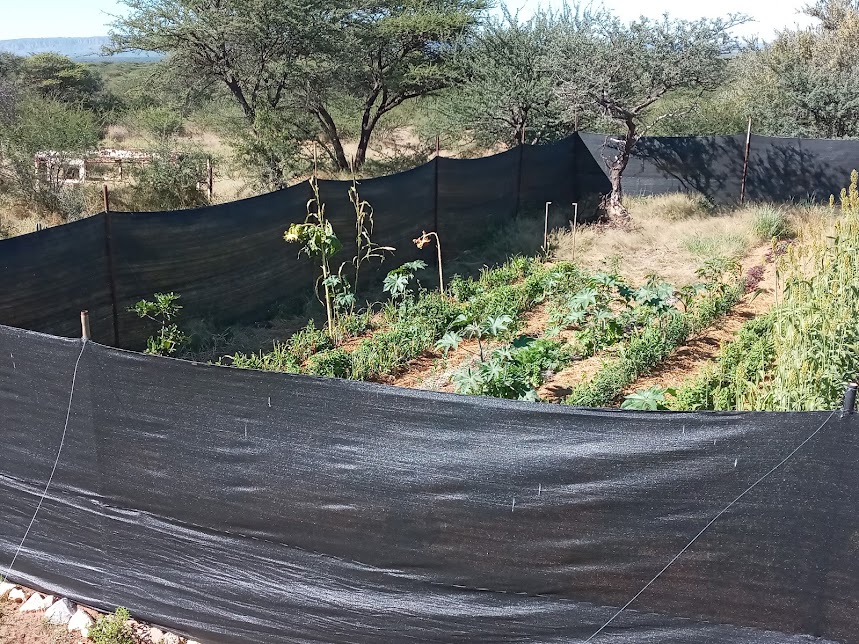
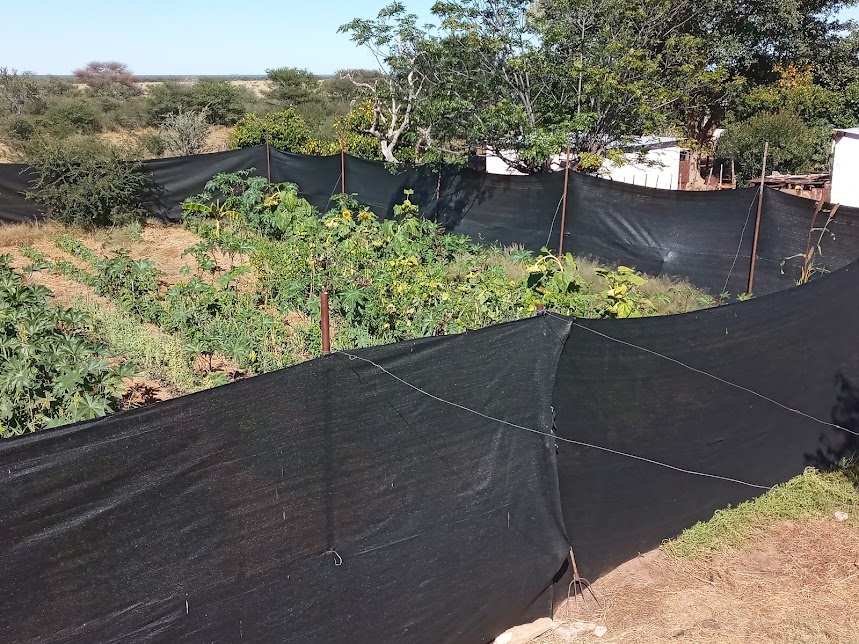
We put up a shade net fence at 3m hight all around the Garden, mainly because of baboons, kudu and other wildlife but also to protect from wind until the hedges/ living fences are established enough on the inside.
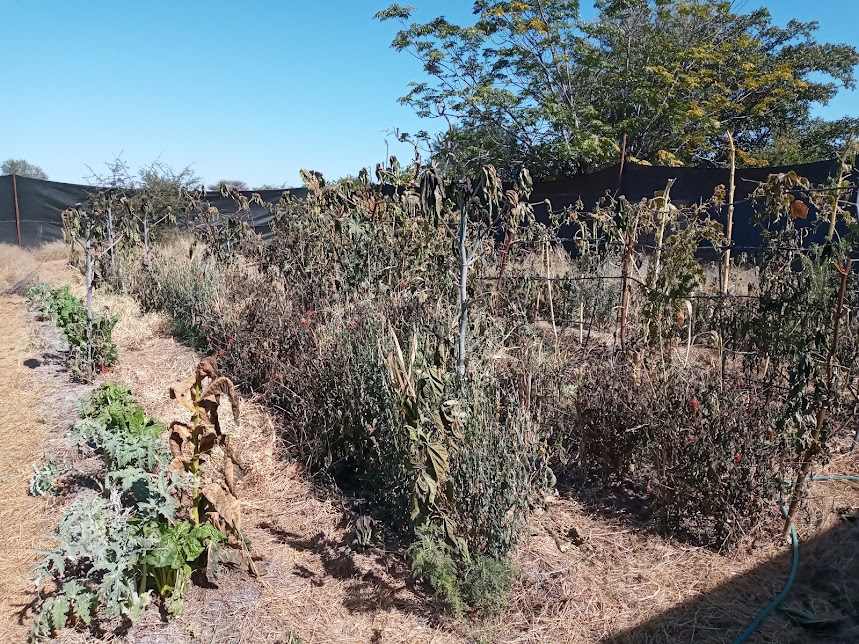
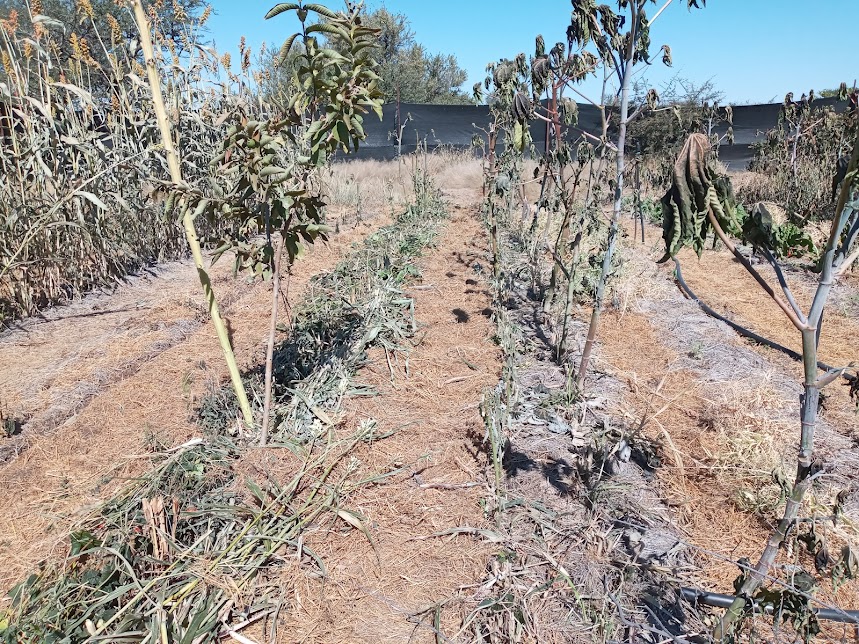
All of this and a bit more resulted in an explosion of growth, and the entire system has been pruned heavily many times over the first year. within the rainy seasons sometimes every 4-6weeks, definitely too much before the first frost. It is hard to resist when the organic accumulation is so vigorous, but for the pioneering phase it is better not to prune to much or not at all.








Sorry, no records were found. Please adjust your search criteria and try again.
Sorry, unable to load the Maps API.